

 Email Us: info@lupinepublishers.com
 Call Us: +1 (914) 407-6109
57 West 57th Street, 3rd floor, New York - NY 10019, USA
Call Us: +1 (914) 407-6109
57 West 57th Street, 3rd floor, New York - NY 10019, USA


Lupine Publishers Group
Lupine Publishers
ISSN: 2644-1217
Mini reviewOpen Access
Exploring The Therapeutic Implications of the PARO Robot Volume 4 - Issue 4
Received: April 26, 2023 Published:May 8, 2023
*Corresponding author: Macy Burr, The University of St. Augustine for Health Sciences, 700 Windy Point Dr, San Marcos, CA 92069, USA
DOI: 10.32474/OAJCAM.2023.04.000192
 Abstract
 PDF
PDFAbstract
Animal-Assisted Interventions (AAI) refer to interventions that purposefully incorporate animals into health, education, or human service settings to improve the health and wellness of the recipients. Animal Assisted Therapy (AAT) is a form of AAI and refers to formal therapy that incorporates animals to make progress toward therapeutic goals (International Association of Human-Animal Interaction Organizations, [1]). AAT may decrease stress and anxiety and improve mood for the recipients of therapy (Barker, Barker, McCain, & Schubert, [2]; Thelwell, [3]). There is a need to consider alternative interventions for those who may benefit from a similar intervention to AAT when interacting with live animals is not possible. Animal Related Engagement (ARE) refers to engagement with animal-related stimuli when interacting with animals is not possible. (The Association of Animal- Assisted Intervention Professionals, [4]). PARO therapeutic robot is an interactive and advanced robot seal that has many positive implications for individuals in medical contexts. The result of this mini review provides support for the beneficial effects of PARO for many populations and in different settings. While there are more studies confirming the positive effects of interacting with PARO for individuals with dementia, PARO may offer therapeutic benefits to other populations as well. Researchers should continue to explore the use of PARO in healthcare contexts.
Keywords: Robotic animal-assisted therapy; PARO; Animal-Assisted Therapy; Dementia; Animal-related engagement
Abbreviations: Animal-Assisted Interventions: AAI; Animal-Assisted Therapy: AAT; Animal-Related Engagement: ARE; Autism spectrum disorder: ASD; Trier Social Stress Test for Children: TSST-C
Introduction
The human-animal bond refers to the mutually beneficial relationships between people and animals (The Association of Animal-Assisted Intervention Professionals, [4]). The idea that animals can impact health and well-being is a central idea related to the purpose of animal-assisted interventions (AAI). AAI refers to interventions that purposefully incorporate animals into health, education, or human service settings to improve the health and wellness of the recipients. Animal Assisted Therapy (AAT) is a form of AAI and refers to formal therapy that incorporates animals to make progress toward therapeutic goals (International Association of Human-Animal Interaction Organizations, [1]). Professionals including but not limited to occupational therapists, physical therapists, speech-language pathologists, counselors, and psychologists may incorporate animals into their treatment sessions for individuals with a wide range of medical issues or disabilities across various settings (The Association of Animal-Assisted Intervention Professionals, [4]). AAT is planned, structured, and the target of intervention may be to improve the physical, cognitive, behavioral, and or socio-emotional functioning of the participants. Researchers have found that AAT has a wide range of therapeutic benefits. For example, interacting with therapy animals has been shown to reduce the perception of pain (Barker, Knisely, Schubert, Green, & Ameringer, [5]). AAT may also decrease stress and anxiety (Barker, Barker, McCain, & Schubert, [2]). Interacting with animals can also help improve mood (Thelwell, [3]). Decreased pain perception, stress, and anxiety as well as improved mood can have the potential to enhance or improve therapy effectiveness.
Due to the nature of incorporating live animals into therapy, there are challenges to practice. For example, in some situations, the presence of an animal may be contraindicated for those who are immunocompromised (Lefebvre, Waltner-Toews, Peregrine, Reid-Smith, Hodge, & Arroyo, [6]). Furthermore, it is imperative that therapy animals are properly matched to the client and setting (Winkle, Johnson, & Mills, [7]). This implies the importance of screening clients for participation in AAT and that there may be times when AAT should not be implemented. There is a need to consider alternative interventions for those who may benefit from a similar intervention to AAT when interacting with live animals is not possible. Animal Related Engagement (ARE) refers to engagement with animal-related stimuli (Chastain, Fine, and Stewart, 2022). Animal-related engagement may include virtual therapy animal visits, watching videos of pets, coloring photos of pets, crafts or puzzles that are animal themes or even interacting with robotic animals. Researchers have found that different stimuli related to dogs such as watching a puppy video, completing a dog coloring activity, and interacting with a plush and a robot dog can increase engagement for individuals with dementia (Marx, Cohen- Mansfield, Regier, Dakheel, Srihari et al., [8]).
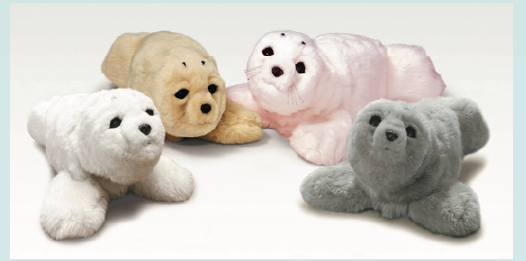
PARO therapeutic robot is an interactive and advanced robot seal that responds to touch, sound, light, temperature, and posture (PARO,[9]). PARO even opens and closes its eyes and makes sounds that resemble a baby harp seal. PARO can behave in a way that the participant interacting with it prefers and responds to its new name. Interacting with PARO may be considered a form of ARE. PARO may offer therapeutic effects for a wide range of populations. For example, in a scoping review looking at the effects of PARO on individuals with dementia in care settings, benefits include decreasing negative emotion and behavioral symptoms, enhancing social engagement, and increasing the mood and quality of care experience (Hung, Liu, Woldum, Au-Yeung, Berndt et al., [10]). The purpose of this mini review is to review the literature regarding PARO’s therapeutic benefits across various settings.
Figure 1:
Results
Researchers have identified several therapeutic benefits to interacting with PARO for individuals with dementia (Hung, Liu, Woldum, Au-Yeung, Berndt et al., [10]). For example, PARO has been demonstrated to improve negative emotions and behavioral symptoms in individuals with dementia (Hung, Liu, Woldum, Au-Yeung, Berndt et al., [10]; Moyle et al.,[11]). Furthermore, Takayanagi, Kirita, and Shibata [12] found that individuals with dementia were more interested in PARO than a stuffed lion toy. This interest was demonstrated by talking more frequently, showing more positive emotional expressions, and laughing more often with PARO. Moyle et al. [11] also found that PARO is effective in improving a sense of pleasure and decreasing agitation for individuals with dementia. Researchers have also found that interacting with PARO can improve anxiety and depressive symptoms (Takayanagi, [12]). Not only has PARO been shown to improve mood and decrease agitation, but PARO has been associated with a decreased use of psychotropic medication for individuals with dementia (Mervin et al., [13]).
PARO also offers social benefits for individuals with dementia (Hung, Liu, Woldum, Au-Yeung, Berndt et al., [10]). In a qualitative study, Moyle, Bramble, Jones, and Murfield [12] found that staff working with people with dementia believed that PARO compared to a look-alike plush toy, was more exciting, provided more opportunities for engagement, and offered more therapeutic benefits. Moyle et al. [11] also demonstrated that interacting with PARO can result in improved verbal and visual engagement for individuals with dementia (Moyle et al.,[11]). Similarly, Sung, Chang, Chin, and Lee [] concluded that interacting with PARO for 30 minutes twice a week for four weeks can result in improved communication, interaction skills, and activity participation. Robinson, MacDonald, Kerse, and Broadbent [16] completed a randomized controlled Citation: Macy Burr*. Exploring The Therapeutic Implications of the PARO Robot. Open Acc J Comp & Alt Med 4(4) - 2023. OAJCAM. MS.ID.000192. DOI: 10.32474/OAJCAM.2023.04.000192 524 trial looking at the effectiveness of PARO sessions for residents in a retirement home. The researchers concluded that PARO could improve loneliness and have a comparable positive social effect to a real animal. Overall, it appears that interacting with PARO can offer numerous psychological benefits as well as improve social engagement for individuals with dementia.
Because of PARO’s stress-alleviating effects, PARO has been used to decrease stress for populations other than individuals with dementia. Geva and Levy-Tzedek [17] found that touching PARO is effective in reducing pain ratings and improving mood in healthy young adults. Additionally, according to Shibata, Hung, Petersen, Darling, Inoue, et al. [18], PARO may help improve mood, and decrease pain and anxiety for pediatric patients in the pediatric intensive care unit. PARO has also been used to alleviate stress for healthcare professionals during the COVID-19 pandemic (Shibata, Hung, Petersen, Darling, Inoue, et al., [18]. Wagemaker, Dekkers, van Rentergem, Volkers, and Huizenga [19] sought to explore the impact of PARO compared to a plush seal on alertness and mood for people with moderate to severe intellectual disabilities. Although the interactions with PARO were positive, PARO only had a significant positive influence on one of the participant’s moods and alertness. The researchers concluded that it is feasible to implement and conduct a study on robot-based AAT for residents with moderate to severe intellectual disabilities in a mental health institution. While it was recommended to be cautious with purchasing expensive robotic animals due to the uncertain efficacy for individuals with intellectual disabilities, the researchers did note the generally positive interactions between the participants and PARO.
Okita [20] studied the effects of PARO on pediatric patients in a hospital setting. Although the patients had a variety of pathological symptoms, the researchers looked specifically at how PARO can reduce pain and emotional anxiety. The study also identified when therapy with PARO was most effective; alone, or together with the child and parent. The results of the study indicated that PARO was more successful in decreasing pain and negative emotional traits when the patients were with their parents and PARO compared to when they were alone with PARO. The therapy which incorporated PARO together with the patient and parent helped the parent’s perspective taking and thus parent modeling which may have contributed to enhancing the patient’s coping skills.
Crossman, Kazdin, and Kitt [21] examined the effects of interacting with PARO in 87 children who were recruited from the local community. The participants interacted with PARO for 15 minutes after the Trier Social Stress Test for Children (TSST-C), which induces moderate psychosocial stress. The TSST-C involves participants being told the beginning of a story that they must develop an ending to. The participants must also present their endings to the story and complete a mental arithmetic task to two judges and a video camera. The TSST-C has been validated as an appropriate simulation of a stressful situation. The participants were able to pet, touch, and talk to PARO after the stressful situation. The results revealed that the participants interacting with PARO demonstrated an improved mood compared to the control conditions. These findings offer promising implications for the use of PARO in pediatric mental health settings. Veronesi, Trimarco, Botticelli, Armani, Bentenuto, et al. [22] investigated the role of PARO as a social mediator in groups of children with neurodevelopmental disorders. The results of the experimental study showed that the presence of PARO facilitated communication and social skills in children with autism spectrum disorder (ASD) without intellectual impairment. However, PARO did not significantly improve communication for children with ASD and intellectual impairment.
Discussion
The results of the literature review suggest that there are many potential benefits for the use of PARO in healthcare contexts. There are far more studies confirming the beneficial effects of PARO for individuals with dementia. Several studies have confirmed the beneficial effects benefits on emotional and behavioral symptoms, social engagement, and mood for individuals with dementia in care settings (Hung, Liu, Woldum, Au-Yeung, Berndt et al., [10]). However, evidence exists that provides potential implications for the benefits of PARO on stress for younger individuals without dementia. There may also be positive effects for children with various disabilities or health concerns. Interestingly, there were two studies that suggested that interacting with PARO was not beneficial in improving the selected outcomes for individuals with intellectual impairment (Wagemaker, Dekkers, van Rentergem, Volkers, & Huizenga, [19]; Veronese, Trimarco, Botticelli, Armani, Bentenuto, et al., [22]. For example, Wagemaker, Dekkers, van Rentergem, Volkers, and Huizenga [23] found that while the interactions with PARO and the individuals with severe intellectual disabilities were positive, there was only a significant positive influence on one of the participant’s mood and alertness. Similarly, Veronese, Trimarco, Botticelli, Armani, Bentenuto, et al. [19] found that interacting with PARO had a significant positive influence on communication and social skills for children with ASD without intellectual disabilities but not for children with ASD with intellectual disabilities. The study of social robotics and ASD has become increasingly popular (Kouroupa, Laws, Irvine, Mengoni, Baird, & Sharma, [23]). However, few studies have looked at the benefits of PARO for ASD. Difficulties in social interaction and communication are core features of ASD (The American Psychiatric Association, [24]). Because of the promising effects of PARO on social interaction, future research should explore how interacting with PARO can improve social function and communication for individuals with ASD.
Conclusion
The result of this mini-review provides support for the beneficial effects of PARO for many populations and in different settings. While there are more studies confirming the positive effects of interacting with PARO for individuals with dementia, PARO may offer therapeutic benefits to other populations as well. Researchers should continue to explore the use of PARO in healthcare contexts.
Acknowledgments
The researcher would like to acknowledge Dr. Takanori Shibata for providing the photo of PARO robots in this article.
Conflict of Interest
No conflicts of interest exist.
References
- International Association of Human-Animal Interaction Organizations. (2014). The IAHAIO definitions for animal-assisted intervention and guidelines for wellness of animals involved.
- Barker SB, Barker R, McCain NL, Schubert CM (2016) A randomized cross-over exploratory study of the effect of visiting therapy dogs on college student stress before final exams. Anthrozoös 29(1): 35-46.
- Thelwell ELR (2019) Paws for thought: A controlled study investigating the benefits of interacting with a house-trained dog on university student’s mood and anxiety. Animals (Basel) 9(10): 846.
- The Association of Animal Assisted Intervention Professionals. (2022). What is AAI?
- Barker SB, Knisely JS, Schubert CM, Green JD, Ameringer S (2015) The effect of an animal-assisted intervention on anxiety and pain in hospitalized children. Anthrozoös 28(1): 101-112.
- Lefebvre SL, Waltner-Toews D, Peregrine AS, Reid-Smith R, Hodge L, et al. (2006) Prevalence of zoonotic agents in dogs visiting hospitalized people in Ontario: Implications for infection control. J Hosp Infect 62(4): 458–466.
- Winkle M, Johnson A, Mills D (2020) Dog welfare, well-being and behavior: Considerations for selection, evaluation, and suitability for animal-assisted therapy. Animals (basel) 10(11): 2188.
- Marx MS, Cohen-Mansfield J, Regier NG, Dakheel Ali M, Srihari A et al. (2010) The impact of different dog-related stimuli on engagement of persons with dementia. American Journal of Alzheimer’s Disease & Other Dementias® 25(1): 37-45.
- PARO (2014) PARO therapeutic robot.
- Hung L, Liu C, Woldum E, Au-Yeung A, Berndt A, et al. (2019) The benefits of and barriers to using a social robot PARO in care settings: A scoping review. BMC Geriatrics 19(232): 1-10.
- Moyle W, Jones CJ, Murfield JE, Thalib L, Beattie ER A, et al. (2017) Use of a robotic seal as a therapeutic tool to improve dementia symptoms: A cluster randomized controlled trial. JAMDA 18(9): 766-773.
- Takayanagi K, Kirita T, Shibata T (2014) Comparison of verbal and emotional responses of elderly people with mild/moderate dementia and those with severe dementia in responses to seal robot, PARO. Front Aging Neurosci 6(25): 1-5.
- Mervin MC, Moyle W, Jones C, Murfield J, Draper B et al.(2018) The cost-effectiveness of using PARO, a therapeutic robotic seal, to reduce agitation and medication use in dementia: Findings from a cluster-randomized controlled trial. Journal of the American Medical Directors Association 19: 619-622.
- Moyle W, Bramble M, Jones C, Murfield J (2018) Care staff perceptions of a social robot called PARO and a look-alike plush toy. Aging and Mental Health 22(3): 330-335.
- Sung HC, Chang SM, Chin MY, and Lee WL (2015) Robot-assisted therapy for improving social interactions and activity participation among institutionalized older adults: A pilot study. Asia Pac. Psychiatry 7(1): 1–6.
- Robinson H, MacDonald B, Kerse N, Broadbent E (2013) The psychological effects of a companion robot: A randomized controlled trial. JAMDA 14(9): 661-667.
- Geva N, Uzefovsky F, Levy-Tzedek S (2020) Touching the social robot PARO reduces pain perception and salivary oxytocin levels. Scientific Reports 10 (9814): 1-15.
- Shibata T, Hung L, Petersen S, Darling K, Inoue K, et al. (2021). PARO as a biofeedback medical device for mental health in the COVID-19 era. Sustainability 13(20): 1-17.
- Wagemaker E, Dekkers TJ, van Rentergem JA A, Volkers KM, Huizenga HM (2017) Advances in mental health care: Five N = 1 studies on the effects of the robot seal Paro in adults with severe intellectual disabilities. Journal of Mental Health Research in Intellectual Disabilities, 10(4): 309-320
- Okita SY (2013) Self-other’s perspective taking: The use of therapeutic robot companions as social agents for reducing pain and anxiety in pediatric patients. Cyberpsychology, Behavior, and Social Networking, 16(6): 1-6.
- Crossman MK, Kazdin AE, Kitt ER (2018) The influence of a socially assistive robot on mood, anxiety, and arousal in children. Professional Psychology: Research and Practice 49(1): 48-56.
- Veronesi C, Trimarco B, Botticelli N, Armani G, Bentenuto A, et al. (2023) Use of the PARO robot as a social mediator in a sample of children with neurodevelopmental disorders and typical development. Clin Ter 174(2): 132-138.
- Kouroupa A, Laws RK, Irvine K, Mengoni SE, Baird A, et al. (2022) The use of social robots with children and young people on the autism spectrum: A systematic review and meta-analysis. PloS One 17(6): e0269800.
- American Psychiatric Association (2013) Diagnostic and statistical manual of mental disorders (5th ed.). Arlington, VA: American Psychiatric Publishing.


-

Mark E Smith
Bio chemistry
University of Texas Medical Branch, USA -

Lawrence A Presley
Department of Criminal Justice
Liberty University, USA -

Thomas W Miller
Department of Psychiatry
University of Kentucky, USA -

Gjumrakch Aliev
Department of Medicine
Gally International Biomedical Research & Consulting LLC, USA -

Christopher Bryant
Department of Urbanisation and Agricultural
Montreal university, USA -

Robert William Frare
Oral & Maxillofacial Pathology
New York University, USA -

Rudolph Modesto Navari
Gastroenterology and Hepatology
University of Alabama, UK -
Andrew Hague
Department of Medicine
Universities of Bradford, UK -

George Gregory Buttigieg
Maltese College of Obstetrics and Gynaecology, Europe -

Chen-Hsiung Yeh
Oncology
Circulogene Theranostics, England -
.png)
Emilio Bucio-Carrillo
Radiation Chemistry
National University of Mexico, USA -
.jpg)
Casey J Grenier
Analytical Chemistry
Wentworth Institute of Technology, USA -

Hany Atalah
Minimally Invasive Surgery
Mercer University school of Medicine, USA -

Abu-Hussein Muhamad
Pediatric Dentistry
University of Athens , Greece