

 Email Us: info@lupinepublishers.com
 Call Us: +1 (914) 407-6109
57 West 57th Street, 3rd floor, New York - NY 10019, USA
Call Us: +1 (914) 407-6109
57 West 57th Street, 3rd floor, New York - NY 10019, USA


Lupine Publishers Group
Lupine Publishers
ISSN: 2644-1217
Review ArticleOpen Access
Contributions of Physical Exercise as Auxiliary Treatment in Patients with Substance-Use Disorder Volume 4 - Issue 3
Received: January 23, 2022 Published: February 21, 2023
*Corresponding author: Victor Matheus Lopes Martinez, Pontifical Catholic University of Rio Grande do Sul, Brazil
DOI: 10.32474/OAJCAM.2023.04.000188
 Abstract
 PDF
PDFAbstract
The aim of the present study was to present physical exercise as a complementary strategy in the treatment of substanceuse disorders. For that, narrative bibliographic research was carried out in the Scielo, PubMed and Web of Sciene databases, in addition to books on the subject. The data reveal that the regular practice of physical exercise seems to affect changes in three main mechanisms that interfere in the addictive disorder, the neurobiological pathway, the behavioral/social pathway and the psychological pathway. These three areas in general, but mainly the neurobiological route, through psychophysiological and neuroplasticity changes, seem to have a stronger impact both on disorders and on the other 2 pathways mentioned.
Also, control of the environment should be encouraged, avoiding situations that favor the use of the addictive substance. In addition, the literature suggests that physical exercise should be performed at a self-selected intensity, that is, the individual should be able to choose the training difficulty level so that he or she can generate greater levels of autonomy and competence, essential basic psychological needs for life. long-term maintenance of exercise and have the neural, psychological and behavioral benefits magnified. Therefore, it seems that physical exercise helps to promote a reduction in substance-use through several neural, behavioral and environmental pathways, which makes this a very interesting auxiliary strategy in the fight against addictive disorders. It is therefore recommended that more empirical studies be conducted to better understand the real action of exercise in these clinical conditions.
Keywords: Physical exercise; Substance-use disorder; treatment
Introduction
Substance-use disorders is a group of disorders in which individuals develop addictive behaviors in relation to substances with a high addictive content, such as licit drugs such as alcohol and tobacco and illicit drugs such as cannabis, cocaine and crack [1]. The incidence of substance-use disorders is huge, for example, according to the National Survey on Drug Use and Health [2]. in the United States alone, almost 41 million individuals over 12 years of age have had some disorder in as a result of substanceuse in 2019, which is alarming. Several treatments are developed and tested throughout the world, with the use of medication and psychotherapy being very common, as well as changes in the context of the individual that do not encourage the use of the substance to which the person is addicted [3,4].
One of the alternatives that has been studied in recent years is the use of stress control strategies with bodily practices such as yoga, meditation, mindfulness and physical exercise. In common, these techniques work by altering the psychophysiological and neurobiological mechanisms of perception of stressful situations that in general lead to the inappropriate use of the addictive substance, as well as working on the reward system in order to readapt this mechanism through neuroplasticity [3,5]. Thus, the objective of this brief narrative review is to shed light on the possibility of physical exercise as complementary strategies in the treatment of individuals with substance-use disorders.
Physical Exercise Mechanisms That Reduce Substance-Use Disorders
The individual, when using drugs, causes a change in his neurobiological mechanisms, especially in his reward system, considering that when receiving the chemical stimuli arising from the use of the substance, there is a type of “kidnapping” of the will, that is, the user becomes hostage to drug use, dependent on continuous use and, depending on the substance in question, quickly what was initially experienced as something pleasurable gradually begins to become the escape from abstinence [6] . That is, the person, after a brief period of continued use, stops using the drug for pleasure and starts using it to obtain a kind of escape from the displeasure of not being under its effect [6,7]; This habit increases the probability of the emergence of mental disorders such as anxiety, as it disrupts the neurophysiological mechanism of stress, the individual begins to incessantly seek the use of the substance again, which can lead to pathological cycles of mental disorders.
The substance use disorder favors the emergence of some mental disorders, especially anxiety, so that both disorders seem to feed off each other, because even though both may occur independently of each other, the occurrence of one favors the development of the other, generating a vicious cycle, such as tobacco use, in which the anxious individual uses cigarettes to relieve their symptoms, but precisely the act of smoking increases the probability of the person developing an anxiety disorder due to the withdrawal symptoms caused by the use [8,9]. Adding this to traumas that may occur throughout the human being’s life, the use of some psychoactive substance can trigger several psychiatric problems [10], as well as such mental problems can lead the individual to flee from their reality through the consumption of narcotics [11,8].
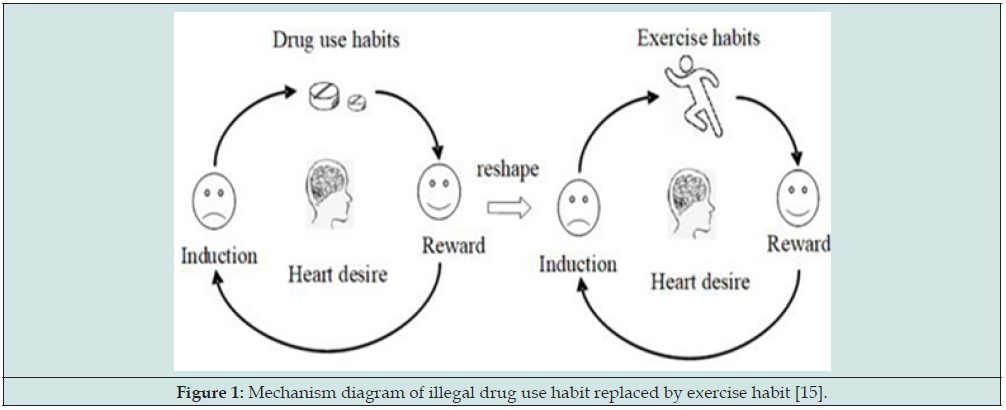
It is also important to point out that the control of substance use combined with physical exercise to promote considerable improvements in mental health aspects [12]. The data suggest that when practicing physical exercise, the release of neurotrophins (such as BDNF) occurs, which promote neurogenesis and, above all, neuroplasticity, something that is extremely altered in drug users (in search of drug rewards or withdrawal symptoms). [13], and the result tends to be a reduction in clinical symptoms of mental health, as the individual will have greater attentional control (improvement in their executive functions), return to normal use of the reward system and consequent formation of new, healthier habits (replacing the old one of drug addiction), such as in this case the regular practice of physical activity [12,14,15]. even if remnants of addiction remain for a prolonged period of time after cessation of use [13,7]. In addition, environmental change in the way of removing triggers that lead to the consumption of drugs and substances with high addictive pleasure can by creating situations in which healthy habits are promoted at the expense of bad habits [15] (Figure 1).
Figure 1: Mechanism diagram of illegal drug use habit replaced by exercise habit [15].
It is also important to point out that physical exercise, according to [14] should be at a self-selected intensity, as this promotes the perception of exercise autonomy, increasing the feeling of competence, including 2 of the 3 basic psychological needs [16]. Still, this self-selection would influence the individual to mask the interoceptive cues, that is, the subjective perception of effort decreases, which in addition to making the person able to remain for a longer period of time in the activity, can also improve the neuroplasticity mechanisms and increased control and functioning of the prefrontal cortex (PFC) (an area related to executive functioning). This greater top-down functioning of the PFC improves executive functions, including inhibitory control, which can help patients with substance use disorder to control their emotional impulses that direct them to make indiscriminate use of the addictive substance [14,15].
This so-called “top-down” mechanism, that is, top-down control, in which the central nervous system (CNS) and, above all, the most superficial layers of the brain, responsible for our rational behaviors, the neocortex (places such as the prefrontal cortex itself) control biological alterations, including the desire to use narcotics, since the desire to use these substances comes from subcortical, more primitive areas of the brain, regions that control emotions, the limbic system (Figure 2).
Figure 2: Pace control during continuous exercise while integrating top-down (cognitive functions) and bottom-up processing factors (physiological responses) [14].
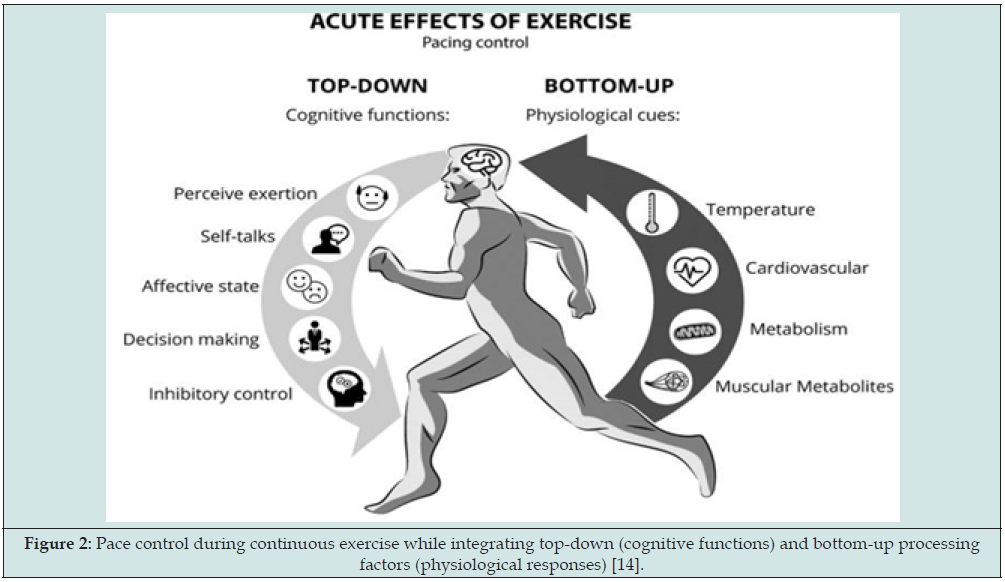
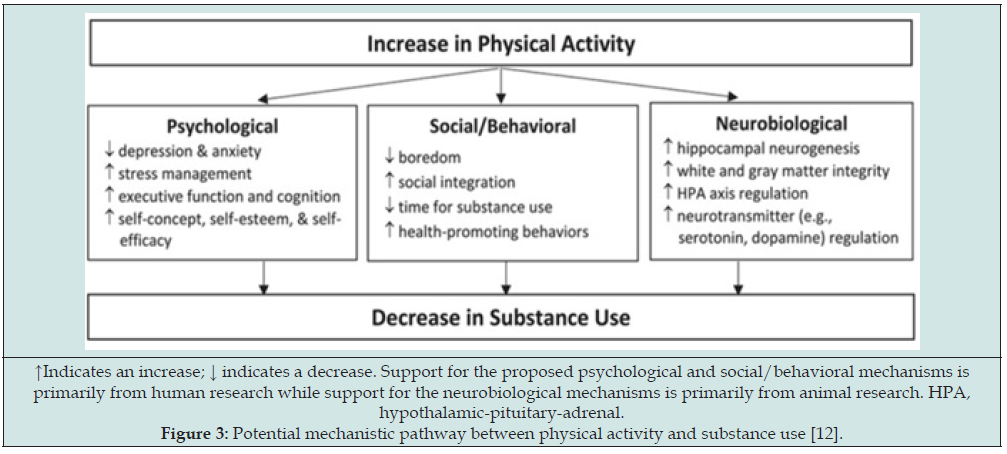
Figure 3: ↑Indicates an increase; ↓ indicates a decrease. Support for the proposed psychological and social/behavioral mechanisms is primarily from human research while support for the neurobiological mechanisms is primarily from animal research. HPA, hypothalamic-pituitary-adrenal. Figure 3: Potential mechanistic pathway between physical activity and substance use [12].
Conclusion
Thus, we can see that physical exercise, through neurobiological, psychological and behavioral mechanisms, can promote the reduction of substance use. Neurobiological mechanisms such as increased neuroplasticity, regulation of the hypothalamus-pituitary gland-adrenal gland (HPA) axis (which regulates the activation of the autonomic nervous system when facing stressful situations that may perhaps trigger the use of these substances) and release of neurotransmitters such as serotonin and dopamine that regulate motivation and inhibitory control. As for psychological mechanisms, dependent on these neurobiological changes, they reduce mental disorders such as depression, anxiety and stress through increased stress control (since by controlling stress, the individual tends to suffer fewer mental health symptoms) and improve executive and cognitive functioning , by promoting inhibitory control to curb substance use impulses, as well as improving decision-making, preventing misuse [12] (Figure 3). Finally, physical exercise seems to help promote a reduction in substance use through several neural, behavioral and environmental pathways, which makes this a very interesting auxiliary strategy in the fight against addictive disorders. It is recommended that more empirical studies be conducted to better understand the real action of exercise in these clinical conditions.
References
- Christensen MR, Anderson-White E, Ryan LJ, Ricardo MM, Krembuszewski BA, et al. (2022) Substance-Use Disorders. Developmental Psychopathology pp. 279-310.
- (2023) National Survey on Drug Use and Health 2020 (NSDUH-2020-DS0001) | SAMHDA. (n.d.).
- Bayles C (2014) Using mindfulness in a harm reduction approach to substance abuse treatment: A literature review. International Journal of Behavioral Consultation and Therapy 9(2): 22.
- Gearhardt, AN, Schulte EM (2021) Is Food Addictive? A Review of the Science 41: 387-410.
- Rácz I (2014) Neuroplastic changes in addiction. Frontiers in Molecular Neuroscience 6: 56.
- Koob GF (2020) Neurobiology of Opioid Addiction: Opponent Process, Hyperkatifeia, and Negative Reinforcement. Biological Psychiatry 87(1): 44-53.
- Solomon R L (1980) The opponent-process theory of acquired motivation: The costs of pleasure and the benefits of pain. American Psychologist 35(8): 691-712.
- Moylan S, Jacka FN, Pasco JA, Berk M (2013) How cigarette smoking may increase the risk of anxiety symptoms and anxiety disorders: a critical review of biological pathways. Brain and Behavior 3(3): 302-326.
- Smith JP, Book SW (2008) Anxiety and SUBSTANCE-USE Disorders: A Review. The Psychiatric Times 25(10): 19-23.
- Khokhar JY, Dwiel LL, Henricks AM, Doucette W T, Green AI (2018) The Link Between Schizophrenia and Substance-Use Disorder: A Unifying Hypothesis. Schizophrenia Research 194: 78-85.
- Jouhki H, Oksanen A (2021) To Get High or to Get Out? Examining the Link between Addictive Behaviors and Escapism. Substance Use & Misuse 57(2): 202-211.
- Brellenthin AG, Lee D (2018) Physical Activity and the Development of Substance-Use Disorders: Current Knowledge and Future Directions. Progress in Preventive Medicine (New York, N.Y.), 3(3): e0018.
- O’Brien CP (2009) Neuroplasticity in addictive disorders. Dialogues in Clinical Neuroscience 11(3): 350-353.
- Costa KG, Cabral DA, Hohl R, Fontes EB (2019) Rewiring the Addicted Brain Through a Psychobiological Model of Physical Exercise. Frontiers in Psychiatry p. 10.
- Zhang Z, Liu X (2022) A Systematic Review of Exercise Intervention Program for People With Substance-Use Disorder. Frontiers in Psychiatry 13: 364.
- Deci E, Ryan RM (1985) Intrinsic motivation and self-determination in human behavior. Plenum Press, New York, USA.


-

Mark E Smith
Bio chemistry
University of Texas Medical Branch, USA -

Lawrence A Presley
Department of Criminal Justice
Liberty University, USA -

Thomas W Miller
Department of Psychiatry
University of Kentucky, USA -

Gjumrakch Aliev
Department of Medicine
Gally International Biomedical Research & Consulting LLC, USA -

Christopher Bryant
Department of Urbanisation and Agricultural
Montreal university, USA -

Robert William Frare
Oral & Maxillofacial Pathology
New York University, USA -

Rudolph Modesto Navari
Gastroenterology and Hepatology
University of Alabama, UK -
Andrew Hague
Department of Medicine
Universities of Bradford, UK -

George Gregory Buttigieg
Maltese College of Obstetrics and Gynaecology, Europe -

Chen-Hsiung Yeh
Oncology
Circulogene Theranostics, England -
.png)
Emilio Bucio-Carrillo
Radiation Chemistry
National University of Mexico, USA -
.jpg)
Casey J Grenier
Analytical Chemistry
Wentworth Institute of Technology, USA -

Hany Atalah
Minimally Invasive Surgery
Mercer University school of Medicine, USA -

Abu-Hussein Muhamad
Pediatric Dentistry
University of Athens , Greece