
 Email Us: info@lupinepublishers.com
 Call Us: +1 (914) 407-6109
57 West 57th Street, 3rd floor, New York - NY 10019, USA
Call Us: +1 (914) 407-6109
57 West 57th Street, 3rd floor, New York - NY 10019, USA

Lupine Publishers Group
Lupine Publishers
ISSN: 2690-5752
Research Article(ISSN: 2690-5752) 
Tjalf Sparnaay’s Postmodern Paintings: Hyperrealism in Food Still Life Scenes Volume 12 - Issue 2
Received: April 25, 2026; Published: May 07, 2026
Corresponding author: Freerk Heule, Guest Researcher Leiden University Library, Witte Singel 27, 2311 BG Leiden, the Netherlands
DOI: 10.32474/JAAS.2026.12.000384
 Abstract
 PDF
PDFAbstract
The state of research on the high-mountain variant of the Palaeolithic ecumene and the project’s assumptions, currently being implemented in the Tatra mountain group on the border of Poland and Slovakia, are outlined. During recent excavations in the Hučiva cave, numerous traces of the stay of a group of Palaeolithic hunters were discovered. The set of flint blades as weapon fragments and isotopic dates indicate the Magdalenian culture from the penultimate phase of climate warming at the end of the Pleistocene. The remains of fauna document hunting activity, focusing on hunting the Alpine Ibex, which does not occur in the Tatra Mountains today.
Keywords: Tatra Mountains; Palaeolithic; Magdalenian; cave settlement; Ibex hunting
Introduction
Tjalf Sparnaay (born 1954, Haarlem, the Netherlands) lived his youth in Rotterdam. Later he started as a schoolteacher of gymnastics, and switched to the Amsterdam Rietveld Academy of Arts for six months, but lacked inspiration. Making postcards for Art Unlimited with urban works of art provided a subsistence minimum. Doing this, in fact, as an auto-didact he started his career. As he preferred to develop himself more in painting, he accepted, when the Amsterdam based Company asked him to go to New York. He liked the pop-art of the seventies. It was the post-realistic work of Louis K. Meisel (1942, New York) [1] who coined the term ‘photorealism’ in 1969, Charles Bell (1935-1995) [2], who enlarged daily life objects, and the American photorealist painter Richard Estes (1932, Kewanee, Illinois). After 1997 Tjalf started painting food: a slice of bread with chocolate sprinkles, a bun with cheese, colorful ice sorbets, and fried potatoes with mayonnaise, in short, a figurative and highly materialist art form. He is also a musician and photographer, recently he alternately lives in Hilversum, the Netherlands, and after 2015 in the USA.
Tjalf acknowledges that he finds inspiration in Dutch painters of the Golden Age, Johannes Vermeer (1632-1675, Delft), and Rembrandt van Rijn (1606-1669, Leiden and Amsterdam) [3]. Most of all, he likes the style of the 17-18th century Dutch painters of the so-called ‘Banketjes’ (breakfast still-lifes), a form with a laid table with household luxury on a damask tablecloth: glass, silver, tin, precious cutlery, and all kinds of food for the elite. Often emblematic signs of ‘vanitas’ (Latin: nothingness) are present such as watches, candles, empty glasses, books, or skulls, all meaning ‘Memento Mori’ or ‘Beware! Death is your fate.’ This moral aspect was mainstream in the Golden Age, carried by religious pietism [4]. In many cases, only fresh full products are presented, the half opened baked pie is an exemption, showing consumption more than the sterile objects (Figure 1,2). The similarity between the small painting of Jacob Foppens van Es of Flanders (c. 1596-1666) and Sparnaay is striking (Figure 3). Of the younger generation the painter in the magic realistic style Carel Willink (1900-1983, Amsterdam) is often quoted by Tjalf. Carel Willink, “Willink”, Amsterdam: Nijgh & Van Ditmar, 1973.
Figure 1: Willem Claesz. Heda (1594-1680, Haarlem), Still-life ‘Breakfast table’, with a blackberry pie, silver goblet, ‘Roemer’ glass, tin plates, glasses, golden pocket watch, knife and spoon, on a table with damask cloth, 1631, Oil-on-wood, 21.3 x 32.3 inches. Gemäldegalerie, Dresden (Germany.), collection nr. AM-1371-PS01.
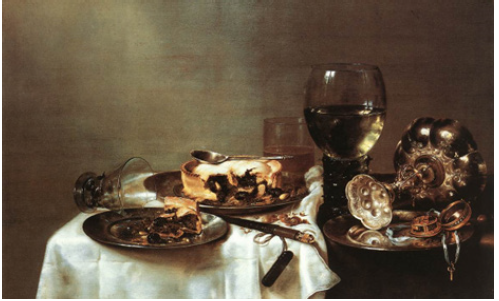
Figure 2: Johannes Vermeer (1632-1675, Delft), above‘The milkmaid’, ca.1660, with pottery, basket with forms of bread. Below, detail. Oil-on-canvas, size 16.2 x 18.1 inches. Rijksmuseum, Amsterdam. Collection nr. A2344.
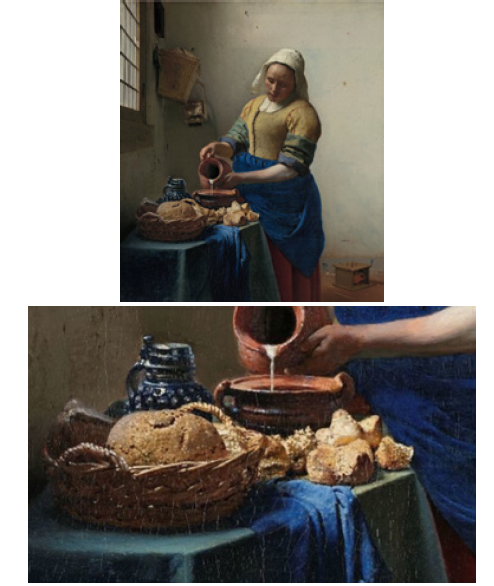
Figure 3: Above. Jacob Foppens van Es (1596-1666, Antwerp), year 1644. A still life of green olives in a blue and white Chinese porcelain bowl, cooked crayfish, two oysters, and a glass of white wine on a table. Private collection. Size: 9.6 x 13.8 inches, oilon- wood; Below. Sparnaay’s lobster (“Kreeft”), 2010, size: 39.3 x 51.2 inches, oil-on-linen. Both surfaces compared: the Sparnaay painting is 15 times bigger.
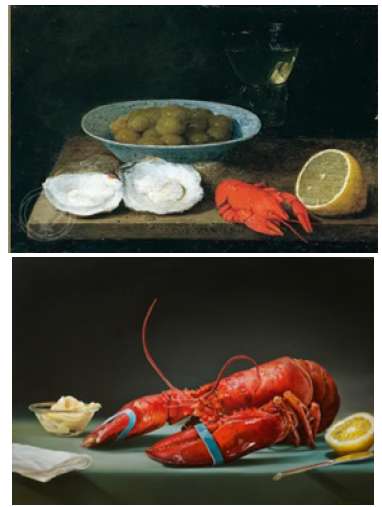
Figure 4: Sparnaay’s studio in Hilversum, the Netherlands.
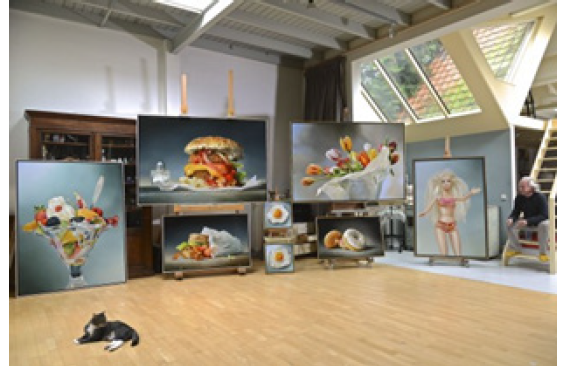
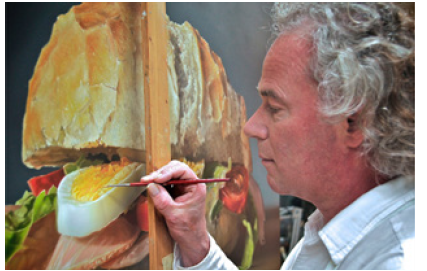
Figure 5: Sparnaay at work: Focus on egg-yolk.
Works
In the Hilversum studio, some 30 kms from Amsterdam, Sparnaay works on his giant paintings of food. He can be called an arrived artist, as his paintings are sold before he even initiates them Figure 6. People report about the small man as a cheerful person, open look, firm handshake, pleasant speaker, and a generous host. One may think he is fond of luxurious food, but he denies haute cuisine and prefers folk food such as eggs, salads, fried potatoes and the Dutch ‘kroket’ which is a snack of ragout with meat, rolled in bread-crumbs, and then fried [5].
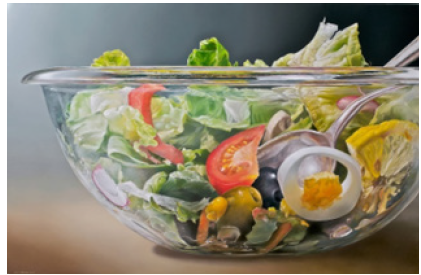
Figure 6: ‘Large salad bowl’, 2006, 47.15 x 70.86 inches, oil-on-linen. Collection of Sparnaay.
The studio has high ceilings with ample light from above and a central table Figure 4 and 5. The black grand piano is on the right rear end surrounded with music literature. He is known as a gifted pianist. On the walls many paintings attract with the eye of the visitor. Sparnaay has no hidden meaning, he proclaims, it’s just simple, wonderful, and people like it. What is his technique? As a photographer he uses digital cameras, video, and the computer to start his research. He does not work from life directly, as the fresh products would be spoiled shortly after exposure to air. Many photos are combined in a Photoshop image and transferred on the linen, to be painted. However, his technical execution is very traditional Figure 12: ‘Old Holland’ cursive ‘Talens Rembrandt’ cursive. oil paint, a wide range of brushes from squirrel to nylon, and Belgian portrait linen of the finest quality, which he sands and prepares ten times Figure 6 and 7, until the surface is smooth enough.
In the art scene one calls his work ‘hyperrealism’ [6]. He paints the beauty of common things or ‘objets trouvés’ and Figure 8 prefers the term ‘pop-art’ or trivial art. In his view: ‘Food is not trivial, but a hamburger is,’ meaning that it could be a product of food technologie up to genetically manipulated or lab-cultured meat. That burger is the icon of western food. Sparnaay glorifies the hamburger because it is so tactile. Many secrets are coming out, many colors are visible, nevertheless, he prefers the cheeseburger as the yellow tint adds something extra. Later he started realizing the baked eggs, now his trademark. The fancy yellow yolk, the shiny white, and the brown crispy edges Figure 9 can be seen on the cover of many books and journals, he published. This food gives him a room for space in color and form, up to the theatrical. To please the market, as an entrepreneur, he accomplishes ten paintings a year. He thinks after the 1960s and 70s in the USA, his European style adds a soul, to the pictures Figure 10.
Figure 7: Brown slice of full-corn bread, butter, and old cheese. (Dutch: kaasboterham II), 2010. Size 31.5 x 39.4 inches, oil-onlinen.
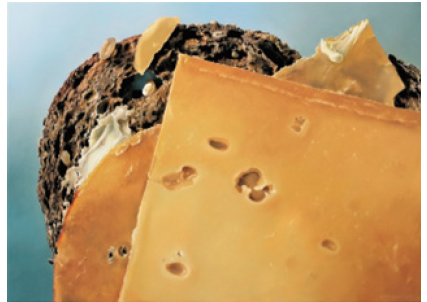
Figure 8: Presentation in the iconic Gallery of Meisel, New York.
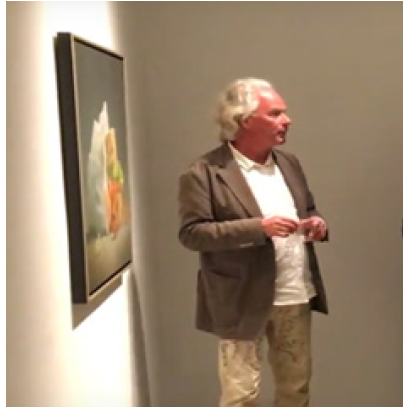
Figure 9: ‘Fried egg’ (Dutch: Gebakken ei), 2013, and above a detail. Private collection of the artist, 31.5 x 31.5 inches, oil-on-linen.
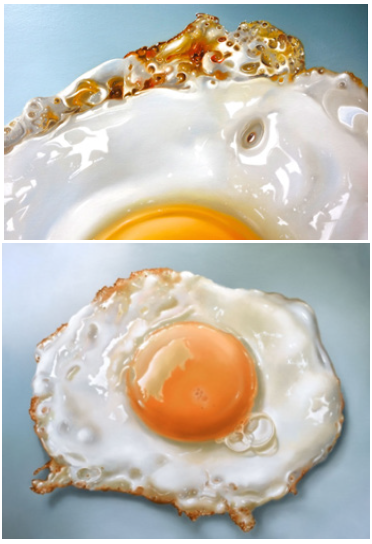
Figure 10: ‘French fries’ (Dutch: bakje patat met mayo) 39.37 x 59 inches, 1999, oil-on-linen.
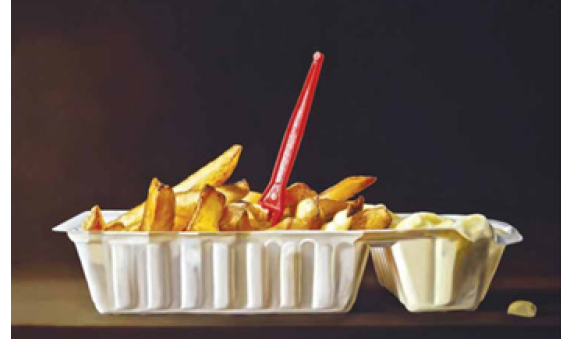
Figure 11: ‘Boiled potatoes, slow-cooked beef, and green beans’ (Dutch: Draadjesvlees) 47.25 x 70.86 inches, oil-on-linen, 2007. Collection of the artist.
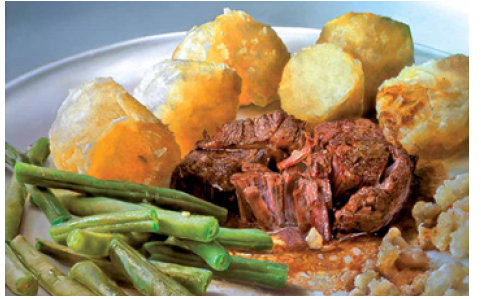
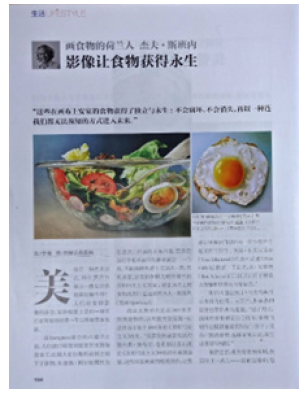
Figure 12: A publication in Mandarin Chinese: ‘Tjalf Sparnaay, Yóuhuà zuòpǐn (oil paintings)’ in het Chinese cultural journal Neweekly Zhōngguó wénhuà zázhì, 2013, pp. 194-195. Photos: the salad bowl and the fried egg.
Metaphysical Reflection
Photorealism is a genre of representational art that encompasses painting, drawing and other graphic media, in which an artist studies a photograph and then attempts to reproduce the image as realistically as possible in another medium. Philosophically, the thing-in-itself (German ‘Ding-an-sich’) as it is called by Immanuel Kant (1724-1804, Koningsbergen) in his ‘Critique of pure reason’ of 1781, [7] such as a fresh egg, tomato, or potato, is different from the prepared baked egg, sliced tomato in a salad, or fried potato Figure 11. Now, as it is food, it is generally recognized, ready to enjoy for its beauty of the uncommon details, essential for nutrition or gustational pleasure! Where half of the world’s population is starving, the mega food pictures problematize the conflict of exaggeration, too much vs shortage [8]. It became the meme of a generation known for over-consumerism. Does it deny the beauty of Tjalf’s works? I think not, but it makes human beings philosophy about the essence of food and its production, refined fabrication and sophisticated additives and preservatives, as a basic element in the continued existence of mankind, a ‘matter of life and death’. Museum director Cathelijne Broers in Amstelveen mentioned his art alienating as a consequence of the big proportions and attention to details. In his latest works, Tjalf wraps wasted food in sheets of transparent cellophane. When asked, Tjalf embraces the concept that his art confirms these ideas, but he does not feature himself as an eco-guru or moralist. After the tenebrous sentiments in the ‘Banketjes’, one could with Sparnaay speak of a hedonist vison of life. On one side, that is the pleasure-seeking mode of the Greek philosopher Epicurus (341-270 B.C), a good, common life, with friendship. On the other, Kant would advise, for man’s autonomy, to practice self-discipline and abstract reasoning against a desiredriven program. Sparnaay’s overt overindulgent representations of food in many forms may initiate a dialogue on the excesses due to intake of calories, animal fat and meat, carbohydrates, and so-called lifestyle diseases, however, it is all in the eye – and mind – of the beholder [9].
International public interest
The interest for Sparnaay‘s works is worldwide: the many books, journals, exhibitions and sales manifest it as well as the many languages necessary to focus on Sparnaay, the innovating artist and businessman [10] Figure 12.
Conclusion
Food can be considered the basic material ingredient for life, with water. The preparation of food can take a multitude of forms, related to environment, social class, culture, time and trends. Innumerable visual artists have interpreted this over time. The representation in the [10] 17-18th. Century ‘Banketje’, as discussed in this exploratory paper, reveals an arrangement of a miniformat on the table laid with elite food products and paraphernalia, in an atmosphere of cosiness and intimacy. While Sparnaay’s paintings are put forward next to the ‘Banketje’ as a formal, king-sized show, with plain products in an almost sterile environment and uninvolved relationship. The painting style is exact and detailed, however, with almost impressionistic brushwork, while Sparnaay’s colours are bright, in the realistic settings. What a difference! The more metaphysical reflection learns the beholder that the 17th and 18th Century panels bring a warning triggered by the anxiety of death, that life should not be overconsumed. Sparnaay has the joy of plentiness in his superfluous amphoras, nevertheless, his works have the signalling function, with stoic coolness, to employ (self) management of overindulgence.
Exhibitions
Gallery Bernarducci Meisel in New York 6 till 29 Oct 2016, PlusOne in London 8 July till 1 Aug 2017, Museum de Fundatie, Zwolle, the Netherlands 17 Jan 2015 till 06 Apr 2015.
Museum JAN (van der Togt), Amstelveen, the Netherlands. ‘Delicious Paintings’ 6 Febr till 16 June 2024.
Information
https://www.tjalfsparnaay.nl/biography
All the images come from the public domain, including Tjalf Sparnaay’s beautiful website:
https://www.tjalfsparnaay.nl/
References
- Louis K Meisel (1976) Photorealism since 1980. New York: Harry N Abrams.
- Henry Geldzahler, Charles Bell, Louis K Meisel (1991) The Complete Works, 1970-1990. New York: Harry N Abrams.
- Seymore Slive (1998) Dutch Painting, 1600-1800. London: Yale University Press.
- Freerk Heule (2018) Chinese artworks in Henk Helmantel’s still life paintings. Fine art connoisseur 15(5): 80-83.
- Laura E Enrique (2013) The most delightful egg: Tjalf Sparnaay. The new aesthetics. Post-modern times 1(2): 54-59.
- John Russell Taylor and Maggie Bollaert (2009) Exactitude Hyperrealist Art Today. London: Thames and Hudson.
- Larissa Berger (2024) Kant's account of emotive art. Inquiry 69(4): 2394-2419.
- Anna M Hazenberg (2013) Mega-realism, simplicity multiplied a millionfold. The new aesthetics. Post-Modern times 1(2): 60-61.
- Rudolf Arnheim (2004) Art & Visual Perception. A Psychology of the Creative Eye. University Of California Press On food: pp. 34, 129, 138, 172, 191, 194, 323.
- Otto Letze (2019) Photorealism: 50 years of hyperrealistic painting. Berlin: Hatje Cantz Verlag; 1 april 2013; Marieke Uildriks (2020) Tjalf Sparnaay. Delicious Paintings. Zwolle (NL): Waanders & De Kunst.
Editorial Manager:
Email:
archaeology@lupinepublishers.com
archaeology@lupinepublisher.com

-
Mark E Smith
Bio chemistry
University of Texas Medical Branch, USA -
Lawrence A Presley
Department of Criminal Justice
Liberty University, USA -
Thomas W Miller
Department of Psychiatry
University of Kentucky, USA -
Gjumrakch Aliev
Department of Medicine
Gally International Biomedical Research & Consulting LLC, USA -
Christopher Bryant
Department of Urbanisation and Agricultural
Montreal university, USA -
Robert William Frare
Oral & Maxillofacial Pathology
New York University, USA -
Rudolph Modesto Navari
Gastroenterology and Hepatology
University of Alabama, UK -
Andrew Hague
Department of Medicine
Universities of Bradford, UK -
George Gregory Buttigieg
Maltese College of Obstetrics and Gynaecology, Europe -
Chen-Hsiung Yeh
Oncology
Circulogene Theranostics, England -
.png)
Emilio Bucio-Carrillo
Radiation Chemistry
National University of Mexico, USA -
.jpg)
Casey J Grenier
Analytical Chemistry
Wentworth Institute of Technology, USA -
Hany Atalah
Minimally Invasive Surgery
Mercer University school of Medicine, USA -
Abu-Hussein Muhamad
Pediatric Dentistry
University of Athens , Greece