
 Email Us: info@lupinepublishers.com
 Call Us: +1 (914) 407-6109
57 West 57th Street, 3rd floor, New York - NY 10019, USA
Call Us: +1 (914) 407-6109
57 West 57th Street, 3rd floor, New York - NY 10019, USA


Lupine Publishers Group
Lupine Publishers
ISSN: 2690-5752
Research Article(ISSN: 2690-5752) 
The Stone Age Man in Highland Environments – A Case Study of the Tatra Mountains Volume 11 - Issue 1
Received: June 04, 2025; Published: June 16, 2025
Corresponding author: Pawel Valde Nowak, Jagiellonian University in Kraków, Poland
DOI: 10.32474/JAAS.2025.11.000351
 Abstract
 PDF
PDFAbstract
The state of research on the high-mountain variant of the Palaeolithic ecumene and the project’s assumptions, currently being implemented in the Tatra mountain group on the border of Poland and Slovakia, are outlined. During recent excavations in the Hučiva cave, numerous traces of the stay of a group of Palaeolithic hunters were discovered. The set of flint blades as weapon fragments and isotopic dates indicate the Magdalenian culture from the penultimate phase of climate warming at the end of the Pleistocene. The remains of fauna document hunting activity, focusing on hunting the Alpine Ibex, which does not occur in the Tatra Mountains today.
Keywords: Tatra Mountains; Palaeolithic; Magdalenian; cave settlement; Ibex hunting
Introduction
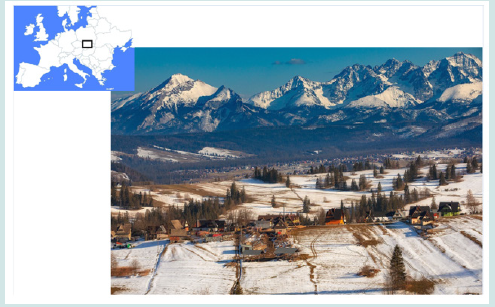
The Tatra Mountains - the only one in today’s Poland and the adjacent part of the Slovak Republic, a compact enclave of alpine relief with numerous caves, could be a special variant of the then ecumene in the Palaeo-, Meso- and Neolithic periods. Mountain peaks are seen from a distance, covered with snow even in summer, probably encouraged prehistoric man to check the resources of such an original environmental variant (Figure 1). It should be assumed that, on the one hand, dependent on his efficiency, and the other, on environmental values, the man of that time penetrated these areas for various purposes, among which the main ones were related to the mastery of a species-specific fauna, stone raw materials for the manufacture of blades and tools, rock shelters, and perhaps also with satisfying ritual and spiritual needs. The project The Stone Age Man in the Caves of the Tatra Mountains currently being implemented, aims to explain the settlement potential of this mountain group, which varied during the dynamic changes of the natural environment in the Pleistocene and the first millenia of the Holocene.
The main goals of the project are to test the following hypotheses:
• Due to extreme environmental limitations, the Tatra Mountains were inaccessible to Stone Age societies.
• The Tatras in the Pleistocene and the first millennia of the Holocene were part of the standard settlement area of Stone Age hunters and gatherers.
• The Tatra Mountains in the Pleistocene and the first millennia of the Holocene were used only occasionally for special purposes.
Figure 1: Tatra Mountains seen from the North. https://commons.wikimedia.org/wiki/File:Widok_na_Tatry_z_Podhala.jpg
Scientific Background of the Project
At the end of the 19th century, interest in caves increased in Europe, which was influenced by several factors. The heritage of the Romantic era made the caves mysterious places, inspiring the art creators and wanderers. It was during these times that the first evidence of the existence of cave painting in Altamira was accidentally discovered, and a little earlier, in 1856, the breach of the cave ruins in a quarry in Neandertal near Düsseldorf, which a few years later led to the identification of an unknown human species - the Neanderthal Man. There was an almost synchronous debate over the validity of Charles Darwin’s concept, as well as a frantic search for another fossil man, named Pitecantropus alalus by Ernst Haeckel in 1868, only calculated and still unknown from bone finds. Finally, it is worth mentioning the more down-to-earth early industrial activities that prompted the then fertilizer producers, such as Oscar Grube in 1871-79, to industrial exploitation of nitrogen-rich cave sediments, among others Nietoperzowa Cave, near Ojców, and to mention the destruction of the dripstones of the caves to obtain collectable specimens of stalactites.
Although the first scientific interest in Polish caves was primarily in the vicinity of Ojców and the Mników Valley in the south of the Cracow-Częstochowa Upland, their main 19th-century researcher, Gotfryd Ossowski, tried to include the Tatra caves in the then-research program of such objects. Both for him and his archaeological successors in the 1930s, these attempts ended with negative results [1,2]. For almost a hundred years, from the midnineteenth century, the object with which great hopes were placed to discover traces of human presence was the Magura Cave in the Polish Tatra. The result of the first sightseeing and scientific visits to this cavern was the acquisition of paleontologically significant animal bones, especially the cave bear [3]. During one of the then trips to the Magura Cave, St. Witkiewicz (the senior) found two bones “... which, in his opinion, bear traces of processing by primitive man” [2]. Despite referring to the scientific authorities of the time, the alleged bone and stone artefacts from the excavations undertaken over time in the Magura Cave were ultimately not recognised. Thus, the topic of prehistoric settlement in the Polish Tatras has been practically closed to this day.
In the Slovak Tatras, we know one archaeological cave site, but without traces dating back to the Stone Age. In the Dúpnica Cave, located in the Western Tatras, in the valley of Sielnicka, pottery, bronze and iron items were found. They date back to the Hallstatt period and the Early Iron Age [4,5]. A Celtic silver coin was also found [6]. The cave was inhabited in the Middle Ages and was used by the population as a shelter during World War II [7]. The significance of the project will increase when we recall the occasional finding of Stone Age find from the Polish Tatras - a flint core from the Kondratowa Valley [8] and the Slovak Tatras - a copper axe from Velka Studena Dolina [9], as well as multicultural discoveries of extremely intense Neanderthal settlements early Homo sapiens at the foot of the Tatra Mountains in Obłazowa Cave [10]. In this context, it should be pointed out that the number of sites from various phases of the Stone Age, discovered and successively researched in the Alps has been increasing over the years [11,12], not forgetting the discovery of the century, as it was called, namely the Neolithic mummy from Similaun [13,14]. The complex traces of the settlement of Mesolithic hunters are particularly noticeable there. Some of them are associated with the hunting of ibexes and chamois, others are associated with the exploitation of the local deposits of siliceous rocks, radiolarites [15], and rock crystal [16]. These traces are located at an altitude of more than 2,000 meters above sea level. Increasingly intense archaeological searches reveal clear traces of specialised hunting in the Rocky Mountains in Colorado [17]. They are dated from 13 thousand years B.C.
The Main Results of the Project and Outlook
The long-lasting mystery of such an early settlement of the Tatra Mountains has recently begun to clarify. In the Belianske Tatras, in the Hučiva Cave in the village Tatranska Kotlina, Slovakia, at an altitude of nearly 1,000 meters above sea level, traces of the settlement of a group of Late-glacial hunters of the Magdalenian culture were discovered [18,19]. During the preliminary excavation works, a group of flint artefacts and relics of fire were excavated (Figure 2). The obtained radiocarbon date 12,190 ± 60 years BP indicates the penultimate warm period of the last glaciation - Bölling interstadial. These finds are accompanied by animal remains, which enriches the so far little information about the Pleistocene fauna in the Tatra Mountains [20].
Figure 2: Hučiva Cave, Slovak Tatra Mountains. A Palaeolithic fireplace is visible in a cross-section of sediments in a cave chamber. On the left, one of several hundred flint blades was found in the Palaeolithic layer next to the fire. Photo by the author.

Figure 3: Hučiva Cave, Slovak Tatra Mountains. Fragments of the jaw of an Alpine ibex from the Palaeolithic layer. Photo by the author.

Noteworthy in the bone material is the large share of Alpine Ibex bones, which are an extinct species in the Tatra Mountains. These remains were lying inside as well as in the neighbourhood of a large and long-burning hearth (Figure 3). This indicates that hunted animals were dressed on site. Clear remains of slaked lime and lumps of hematite ocher indicate that leather processing took place on-site. The findings of bone awls correspond well with this. There are indications that a tusk group of hunters from the Palaeolithic Magdalenian culture stayed seasonally in the examined cave, hunting these animals.
Conclusion
The significance of the project lies in the real possibility of determining the size and character of such early, dating back to the Stone Age, human settlements in the caves of the Tatra massif, both on the Polish and Slovak sides. Additionally, the implementation of the project will bring valuable data on changes in the natural environment of these mountains, recorded in cave sediments and fauna complexes from many thousands of years ago.
Acknowledgment
The Polish National Science Centre grant 2021/41/B/ HS3/03217: The Stone Age Man in the Caves of the Tatra Mountains financed this project.
The research is carried out in cooperation with the Institute of Archaeology of the Slovak Academy of Sciences in Nitra, Slovakia, and the Institute of Archaeology of the Jagiellonian University in Kraków, Poland. The author would like to thank all participants of the research conducted so far, especially PhDr. Marián Soják, PhD., Prof. Dr. A. Nadachowski, Dr. K. Kerneder-Gubała, Dr. M. Kowal, Dr. J. Kościuk-Załupka, A. Kraszewska M.A., Dr. J. Słucki.
References
- Jura A (1955) Grota Magury w Tatrach (1460 m), the highest located residence of man of the Ice Age, Światowit 21: 81-124.
- Zwoliński S (1955) Tatra Cave Region, Światowit 21: 49-80.
- Kiernik E (1914) Materials for palaeozoology of diluvial mammals of the Polish Lands. Part V. Remains of a wolf (Canis lupus L.) from the diluvial layers of the Polish Lands, Kraków, pp. 52-52.
- Šimková Z (2006) Settlement of caves in Liptov. Slovak Karst 44, 119–141.
- 2014 Dúpnica Cave in the Western Tatras and its surroundings in prehistoric times. Sinter 22, 14–18.
- Soják M, Struhár V (2014) Remarkable finds of ancient coins from the cave environment. Denarius 4: 5–9.
- Bella P, Hlaváčová Holúbek P (2007) List of caves of the Slovak Republic (item 30.6.2007). Slovak Museum of Nature Conservation and Speleology, Liptovský Mikuláš, pp. 364.
- Tunia K (1987) A find of a flint core from the Kondratowa Valley in the Tatra Mountains, Acta Archaeologica Carpathica 17: 145-148.
- Novotna M (1973) Finding of a copper axe with a cross blade in the High Tatras, Proceedings of the Faculty of Arts of Comenius University – Musaica, 13: 23-27.
- Valde Nowak P, Nadachowski M, Madeyska T (2003) Obłazowa Cave: human activity, stratigraphy and palaeoenvironment, Kraków pp. 176.
- Hofmann P (2005) Paths in the Inn Valley: An anthropospeleological excursion guide to the caves of the lower Inn Valley between Rosenheim and Kufstein. 1st edition. Books on Demand GmbH, Norderstedt 2005, 151-156.
- Della Casa P (2018) The Leventina prehistoric landscape: (Alpine Ticino Valley, Switzerland). Zürich, pp. 372.
- Spindler K, Rastbichler Zissernig E, Wilfing H, Nedden D Z, Nothdurfter H (1995) The Man in the Ice 2, New Finds and Results. Publications of the Research Institute for Alpine Prehistory at the University of Innsbruck 2, Innsbruck, pp. 325.
- Bachnetzer T, Steiner H, Leitner W (2019) Glacier finds from the Ötztal Alps of North Tyrol and South Tyrol: more than 'Ötzi'. (in:) H. Hessenberger, T. Bachnetzer (eds.), In Geschichten von der Grenze in den Ötztaler Alpen. The bicycle from the Rotmoosferner and other glacier finds, Ötztal museums, writings 2. Innsbruck p. 150-191.
- Kompatscher K, Hrozny Kompatscher, Bassetti M, Castiglioni E, Rottoli M, et al. (2016) Mesolithic settlement and mobility patterns at high altitudes. The site of Staller Sattel STS 4A (South Tyrol, Italy), Quaternary International 423: 23-48.
- Leitner W (2002) Stone Age rock crystal mining in the Tux Alps. Archaeology of Austria 13/1, 44-45.
- Brunswig R H, Doerner J, Diggs D (2014) Eleven Millenia of Human Adaptation in Colorado’s high country: modelling cultural and climatic change in the southern Rocky Mountains, (in:) S. Lacey, C. Tremain, M. Sawyer, Climates of Change: The Shifing Environments of Archaeology, Calgary p. 273-286.
- Soják M, Valde Nowak P (2021) Epipaleolithic settlement of Hucivá Diera in the Belianske Tatras, Eastern Slovakian Prehistory 12: 5-11.
- Valde Nowak P, Baca M, Cieśla M, Kościuk Załupka J, Kraszewska A, et al. (2022) Hučivá Cave: a Magdalenian hunting camp in the Tatra Mountains, Antiquity Project Gallery 96(388): 1008-1014.
- Horaček I, Ložeek V, Knitlova M, Juřičkova L (2015) Darkness under candlestick: glacial refugia on mountain glaciers. (in:) S. Sazelova, Novak M., Mizerova A. (ed.), Forgotten times and spaces: New perspectives in paleoanthropological, paleoetnological and archeological studies pp. 363-377.
Editorial Manager:
Email:
archaeology@lupinepublishers.com
archaeology@lupinepublisher.com

-

Mark E Smith
Bio chemistry
University of Texas Medical Branch, USA -

Lawrence A Presley
Department of Criminal Justice
Liberty University, USA -

Thomas W Miller
Department of Psychiatry
University of Kentucky, USA -

Gjumrakch Aliev
Department of Medicine
Gally International Biomedical Research & Consulting LLC, USA -

Christopher Bryant
Department of Urbanisation and Agricultural
Montreal university, USA -

Robert William Frare
Oral & Maxillofacial Pathology
New York University, USA -

Rudolph Modesto Navari
Gastroenterology and Hepatology
University of Alabama, UK -

Andrew Hague
Department of Medicine
Universities of Bradford, UK -

George Gregory Buttigieg
Maltese College of Obstetrics and Gynaecology, Europe -

Chen-Hsiung Yeh
Oncology
Circulogene Theranostics, England -
.png)
Emilio Bucio-Carrillo
Radiation Chemistry
National University of Mexico, USA -
.jpg)
Casey J Grenier
Analytical Chemistry
Wentworth Institute of Technology, USA -

Hany Atalah
Minimally Invasive Surgery
Mercer University school of Medicine, USA -

Abu-Hussein Muhamad
Pediatric Dentistry
University of Athens , Greece