
 Email Us: info@lupinepublishers.com
 Call Us: +1 (914) 407-6109
57 West 57th Street, 3rd floor, New York - NY 10019, USA
Call Us: +1 (914) 407-6109
57 West 57th Street, 3rd floor, New York - NY 10019, USA


Lupine Publishers Group
Lupine Publishers
ISSN: 2690-5752
Research Article(ISSN: 2690-5752) 
The Past Has Ears at Notre-Dame: Archaeoacoustic and Historically Informed Soundscape Research on the History of Paris’ Cathedral Volume 11 - Issue 3
Received: August 05, 2025; Published: September 16, 2025
Corresponding author: Brian F G Katz, Institute d’Alembert UMR 7190, Sorbonne University, CNRS, Paris, France
DOI: 10.32474/JAAS.2025.11.000364
 Abstract
 PDF
PDFIntroduction
The acoustic heritage of historic spaces such as the Cathedrale Notre-Dame de Paris represents a vital but ephemeral dimension of cultural memory. Unlike architectural features or tangible artefacts, acoustics cannot be preserved in situ; they must instead be captured, simulated, or imaginatively reconstructed (Katz, 2024, Mullins and Katz, 2024) (1,2). Following the 2019 fire that severely damaged Notre-Dame, a wave of interdisciplinary research has emerged with the aim of documenting, modelling, and interpreting its historical soundscape. This resurgence has foregrounded the cathedral not only as an architectural and liturgical monument, but also as a resonant container of cultural experience.
The acoustic environment of medieval cathedrals shaped religious, musical, and social life in profound ways. In the case of Notre-Dame, its towering Gothic vaults and spatial intricacies created a highly reverberant sound field that influenced the composition and performance of liturgical chant and early polyphony. The long reverberation times and diffuse reflections characteristic of this space conditioned both the intelligibility of spoken texts and the aesthetic presentation of music, embedding acoustic response within the fabric of sacred ritual and artistic innovation.
This review synthesises recent contributions to the study of the acoustics of Cathedrale Notre-Dame de Paris, drawing on diverse methodologies including in-situ measurements, acoustic simulation, historically informed soundscape reconstruction, perceptual experimentation, and creative reimagining. Collectively, these projects span domains such as physical acoustics, musicology, performance studies, signal processing, and virtual heritage. They aim not only to reconstruct how Notre-Dame may have sounded across different historical periods, but also to explore how those sounds were perceived, experienced, and shaped by the architectural environment.
To provide structure and critical insight, we categorise the body of work into four thematic domains: (1) physical and simulated acoustic measurements, (2) historically grounded reconstructions of liturgical and musical soundscapes, (3) experimental performance studies that examine the interaction between sound and space, and (4) creative and participatory engagements that communicate sonic heritage to wider audiences. Each of these areas offers distinct methodological strengths and limitations, and together they contribute to a more holistic understanding of Notre-Dame ’s auditory past.
In bringing together these various strands, this review highlights the evolving field of Sound-scape archaeology as applied to monumental heritage. It underscores the importance of acoustic inquiry in heritage conservation, historical interpretation, and the creative reanimation of lost sonic worlds.
The echo of the cathedral
The relationship between architecture and acoustics is foundational to the experience of sacred spaces. In the case of the Cathedrale Notre-Dame de Paris, its iconic Gothic structure creates complex reverberant patterns that influence not only aesthetic perception but also functional aspects such as intelligibility and musical resonance.
Recent efforts to simulate and analyse the acoustic field of the cathedral before and after the 2019 fire used a combination of in situ room impulse response (RIR)1 measurements and geometric acoustic modelling. These studies establish a baseline of acoustic parameters–such as reverberation time (T30)2 and clarity (C80)3– which serve as reference points for both conservation and reconstruction efforts. The most robust of these simulations compare modelled data against pre-fire recordings, achieving strong correlation and demonstrating the validity of hybrid empiricalsimulative approaches. However, challenges remain in modelling historically accurate material properties, particularly for ephemeral elements like wooden furnishings or large congregations.
While providing new tools for exploring the acoustic history of Notre-Dame, these foundational studies also offer essential tools for both evaluating damage and exploring the aural impact of restoration decisions.
Studying Architectural Acoustics
This archaeoacoustic study of Notre-Dame de Paris relies on acoustic measurements made in the cathedral before 2019. Replicating the inner geometry of the cathedral and calibrating this model to those measurements, the models are then modified based on available documentation to represent past or future architectural and decorative modifications. The simulations are then used to generate RIRs, which can be integrated into immersive, interactive rendering engines to reconstruct the acoustic conditions within the cathedral virtually (Katz et al., 2020) (3).
When an acoustic source emits sound, the resulting sound that arrives at a listener/receiver position can be described as a combination of the initial, direct sound, and delayed reflections induced by obstacles (walls, etc.) between and around the source and receiver. The sum of those reflections over time constitutes the room’s acoustic response, quantified by the RIR. When the source stops producing, listeners perceive the gradual decay of sound as reverberation, i.e. the time it takes for the sound to fade. Therefore, the acoustical quality of a room depends on its reverberation time, which must be adapted to its use. When a transmitting voice is in the centre, a shorter reverberation time is required to keep the words intelligible. If the reverberation is too pronounced, it is often necessary to slow down the speech rate to remain comprehensible to the audience.
Scientists have been using physical and digital sound reconstruction methods for decades, but it is only recently that computer technologies have improved the quality and resolution of acoustic modelling sufficiently to enable them to tackle large-scale, complex spaces. With modern modelling approaches, sound in correctly simulated spaces can be perceptually comparable to actual on-site recordings. Once created, models can be modified to test acoustic conditions in different architectural configurations, source and listener positions, and usage contexts. Acoustic simulations can be a powerful tool for historical studies, providing researchers with a sensory presentation of sound previously available only through descriptions.
The contemporary acoustics of Notre-Dame
Despite the notoriety of the cathedral, there are few examples of published data on the acoustical parameters of this space. Katz and Weber (2020) (4) presented details of the acoustic conditions in the cathedral before and after the file. While some previous studies had been published in the early 21st century (Hamayon, 1996, Mercier, 2002) (5,6), these reported varying reverberation times for the modern cathedral (e.g. 7.5 s versus 6.5 s at 500 Hz, respectively), and did not fully explain the measurement protocols used. However, two previous measurement campaigns before the 2019 fire were identified. After the fire, subsequent measurements were also made to document changes to the building’s acoustic state. The plans from these three measurement campaigns are shown in Figure 1. The first of these, from 1987, was recovered from an acoustic study conducted in the context of an organ project under consideration at the time. While various stimuli were employed, only a few balloonburst sources were ultimately exploitable due to a lack of details surrounding the excitation stimuli used (e.g. noise bursts, logarithmic or linear sine sweeps, etc.). While not an ideal omnidirectional source, balloon bursts are valuable in certain situations, offering a portable impulsive source (Patynen et al., 2011) (7). The recorded bursts were digitized from the original analogue tape and analysed.
Foot Notes
1.The room impulse response is a characterisation in the signal domain of the propagation of sound from a source to a receiver. When a spatial (3D) microphone is used, it captures the spatiotemporal distribution of the collection of acoustic reflections off the multitude of surfaces in the room, and their accumulation into a reverberant field.
2.T30 is a measure of the reverberation time, calculated over a decay of 30 dB, starting from a decay of 5 dB after the direct sound, as a more realisable measure given typical signal-to-noise conditions. The decay rate is then extrapolated to an equivalent decay of 60 dB, as per the definition.
3.C80 is a standardised measurement for musical clarity calculated on the RIR. It is the logarithmic ratio of early energy, arriving in the first 80 ms, to the late energy, arriving after 80 ms.
Figure 1: Measurement plans for the three sessions at the Cathedrale Notre-Dame de Paris. Positions are centred under numbered source (S# (red)) and microphone (# or • (blue and green)) labels. The 2020 plan (c) also indicates in a shaded region, the scaffolding near the grand organ at the main entrance (yellow), the overhead debris and structural instability exclusion zone (red), and encumbered/damaged ground (blue) exclusion zones where it was not possible to place measurement equipment.
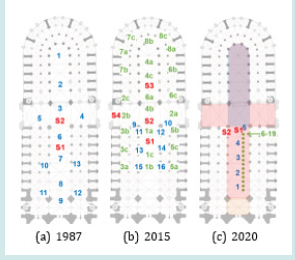
Later, as part of a French research project on Binaural Listening (BiLi), a series of acoustic measurements were carried out in 2015, almost 4 years to the day before the 2019 fire. These detailed measurements were made with the modern sine sweep technique (Farina, 2000) (8), with multiple receiver positions spread over a large portion of the floor area, including binaural and Ambisonic microphones at select positions (see Figure 2a).
After the 2019 fire, access was granted to the construction site for a measurement campaign in June 2020. During the 2019 fire, the falling spire damaged the marble floor of the transept’s central crossing and the modern altar. Due to the risk of further falling debris and structural instability, access to the central nave and transept was restricted, as highlighted in Figure 1c. The choir area was likewise cluttered with debris and, therefore, inaccessible. Many of the lateral chapels had been used to store relocated objects. Scaffolding was also installed to remove the organ and a protection barrier (construction fencing and waist-height perforated metal panels) surrounding the central nave. See photos in Figure 2b; a short video documenting the measurement session is also available online4.
Comparisons between the results of the two pre-fire sessions (1987 and 2015) show a slight but significant reduction in reverberation time (8%), likely attributed to installing a carpet runner in the 1990s to reduce the footfall noise of tourists. Compared with the 2015 data, the reverberation time after the fire had decreased significantly (20%).
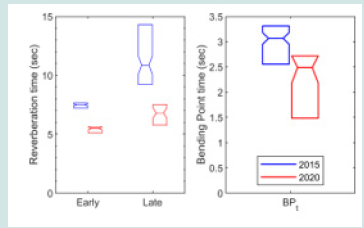
Further examination of the 2015 and 2020 results, limited to comparable source and receiver positions using the marching line multiple slope analysis method (Luizard and Katz, 2014, Weber and Katz, 2019) (9,10), in the 500 Hz octave band filtered RIRs (see Figure 3c) Notre-Dame shows further effects. One can see the general decrease in reverberation times indicated in Figure 3a, while highlighting the problem of using the ISO3382 standard parameters when non-linear decays are present. Analysis results show a decrease in both Early and Late decay rates, indicating reductions in both the primary and secondary “volumes”. In the case of Notre-Dame, the delimitation of the different acoustic volumes is not as stark and evident as in coupled reverberation concert hall designs. However, the transept neatly separates the cathedral into two acoustically distinct zones, as its high ceiling and lack of subdividing walls create a 34 m wide by 14 m deep by 33 m tall zone of free-field propagation between the multilevel eastern and western portions of the cathedral. Decreased decay rates in these volumes also decrease the bending point time. It is noted that all of these parameters are linked to the acoustic coupling conditions. The variability in Late reverberation times for the 2015 condition could be attributed to the complexity of the space and the various acoustic zones, leading to more than a simple double-slope decay with higher-order coupling.
With the completion of the spire, roof, and vaulted ceiling reconstruction and the interior scaffolding removed, subsequent studies will assess the next iteration of this monumental building’s acoustics.
Foot Notes
4.youtu.be/YLi7ASosKvw
Figure 2: a)2015, highlighting measurement equipment in the central aisle of the nave and carpet runner in a side aisle during the measurement session.
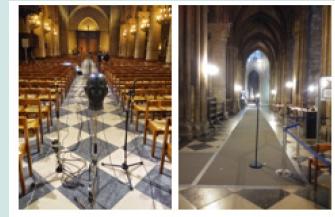
Figure 3: b)2020, highlighting the remote-controlled robot-pulled microphone tripods and the general empty state of the nave during the measurements. Figure 2: Photos highlighting conditions for the (a) 2015 and (b) 2020 measurement sessions.
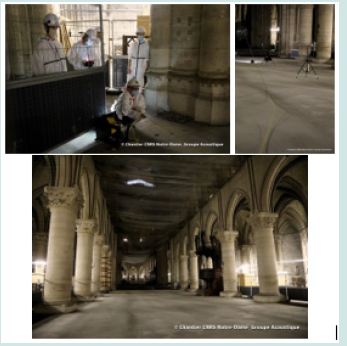
Figure 4: a)Mean reverberation time (T 20) over omnidirectional microphones with standard error bars. 2020 results show those for sweep stimuli (S1) and impulse source gun-shots (S2, Rec positions 1-5).
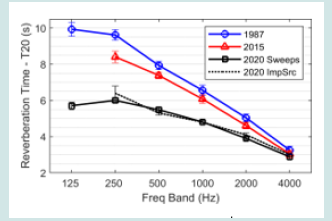
Figure 5: b)Example of octave band filtered RIC decays, normalized, optimized SNR truncation, 2020 sweep stimuli data-set.
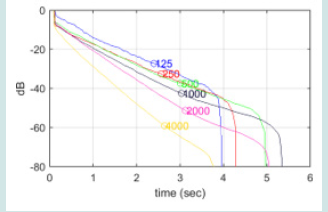
Figure 6: c)Double-slope decay 500 Hz-octave band analysis distributions showing Early and Late reverberation times and the relative time (BPt) of the identified bending point in the RIC decay curves (Luizard et al. (2015) (16) for parameter details). Notched boxplots show the median, 95 % confidence interval, 25th, and 75th percentiles of the data spread. Figure 3: Summary of (a) mean reverberation time over receivers, (b) energy decay curves, and (c) coupled volume analysis.
Acoustics of detail and form
In large historic structures like Gothic churches and cathedrals, many columns and piers, each with distinct shapes, are prevalent. These architectural elements serve as potential obstacles that scatter incoming waves when encountered, a phenomenon of significance in architectural acoustics. Weber and Katz (2022) (11) carried out a significant study, using both numerical simulations and scale model measurements, to investigate the acoustic properties of column form, which is summarized here.
Cox and D’Antonio (2016) (12) introduced the concept of a volumetric acoustic diffuser to help study the influence of complex architectural elements on wave propagation. Modern applications of such diffusers include reflector canopies above concert hall stages (Rindel, 1991) (13) and hanging panels in reverberation chambers (Bradley et al., 2014) (14).
The impact of these architectural features on sound waves varies with wavelength, diminishing for longer (wavelengths) (Rindel, 1986) (15). Nevertheless, waves can diffract significantly for wavelengths similar in size to these architectural features, especially within shadow zones (Medwin and Clay, 1998) (16). For instance, rows of columns in a church’s nave, defining sub-spaces such as the nave and side aisles, can be viewed as lateral reflectors. The Cathedrale Notre-Dame de Paris, constructed over centuries, features cylindrical obstacles with various Gothic-style crosssectional shapes. Weber and Katz (2022) (11) comprehensively explored the scattered reflections generated by select column geometries, using both numerical simulations and physical scale model measurements.
In the field of room acoustics, research traditionally focuses on scattering properties of wall surfaces, assessing scattering and diffusion coefficients (ISO, 2004, 2012) (17,18). These coefficients profoundly impact concert hall sound fields, evaluated through scale models and computer simulations (Ryu and Jeon, 2008, Shtrepi et al., 2015) (19, 20). In contrast, Weber and Katz (2022) (11) examined acoustic reflections from architectural obstacles in isolation from a larger bounding structure. This enables a comprehensive analysis of wave scattering by rigid cylindrical objects with various geometries over a wide frequency range.
Wave scattering research began with Lord Rayleigh’s work on small obstacles compared to wavelength (Strutt, 1871) (21). Analytical solutions for simpler shapes emerged using partial wave series expansion (Morse and Ingard, 1986) (22). For complex geometries, full-scale measurements or scale models are essential (Szeląg et al., 2014) (23). Numerical methods like the boundary and finite element methods have been employed, with time-domain methods allowing broad frequency band analysis (Liu, 2019, Yashiro and Ohkawa, 1985) (24,25).
The audibility of early reflections depends on various factors such as time delay, direction of arrival, signal type, spectrum, sound level, and environmental context (Buchholz, 2011, Olive and Toole, 1988) (26,27). A guideline suggests early reflections are inaudible when their levels are much lower than the direct sound (Begault et al., 2004) (28). These criteria extend to reflections from panels with curved edges (Rathsam and Wang, 2010) (29).
Columns and piers of interest: The many successive construction and renovation campaigns can be seen in part through the geometry of the many piers and columns in the cathedral, and the dates of their construction contribute to our understanding of the development at the building site (Bruzelius, 1987) (30). In total, seven geometries were retained according to architectural criteria, such as their location or frequency, and historical criteria, such as their place among the different Gothic styles or their links of influence with later or earlier architectural styles. The groups of columns they define are shown in Figure 4 with a label attributed to each. There are 5 compound piers consisting of a core flanked by engaged columns and/or pilasters, which extend the arches and ribs to take some of their loads and articulate the structure vertically. These principles were already used in Romanesque architecture (Hoey, 1989, Thurlby, 1998) (31,32), and their section is formed of a single closed shape. This distinguishes them from the piers with colonnettes where long thin en-delit circular columns flank without contact with a central part; in this case, they have a decorative function; two piers of this type were selected. All selected shafts are located in the nave except Ch, which is located in the ambulatory (see Section 2.2). The columns with circular sections present in this part of the cathedral are also indicated in Figure 4 with their diameters. The piers not included in the study, i.e. not coloured, are generally formed with shafts of similar geometries, some of which are visible in Celtibere et al. (1853) (33).
Figure 7: Floor plan with piers, columns, and responds locations. The shafts of identical cross-sections from the selected groups under study are highlighted with a common colour. The columns of the nave with circular shafts are indicated with a circle.
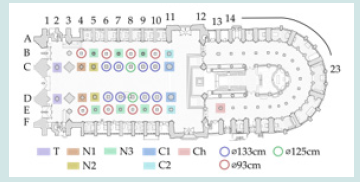
Figure 5 shows the cross sections of the studied shafts with their dimensions given in cm. They were drawn based on orthoimages extracted from the interactive 3D visualization environment developed by the Modeles et simulations pour l’architecture et le patrimoine (MAP) laboratory in the framework of the “digital data” working group of the scientific project for the restoration of the cathedral supported by the Centre National de Recherche Scientifique (CNRS) and the French Ministry of Culture (CNRS/ MC, 2019) (34). This numerical tool integrates the 3D point clouds obtained by several laser survey campaigns conducted notably by Andrew Tallon in 2010 (Sandron et al., 2020) (35) and also by the company Art Graphique et patrimoine (AGP) just after the fire of April 15, 2019.
As mentioned before, the function of a surface diffuser is to redirect sound waves away from a specular reflection and spread them out over time. While a simple circular cylinder achieves spatial spreading, it is not an ideal diffuser, as it produces a highpass, strongly correlated reflection in the backscattering region (Cox and D’Antonio, 2016) (12). Furthermore, its finite size limits its interaction with incident waves. However, introducing discontinuities in the geometry can create scattering sources, resulting in additional wavefronts.
Sound scattering simulations were conducted up to 6 kHz using a low dispersion and anisotropy finite difference scheme with pulse excitation. To ensure accuracy, the method was adjusted near boundaries to eliminate staircase artifacts and validated through comparisons with scale models and analytic measurements.
The simulations considered plane wave incidence and closely aligned with experimental measurements, especially in scenarios with a farfield source and a receiver near the cylinder. Evaluation of the simulated scattered fields focused on perceptually relevant parameters. Similar to reflectors, their finite size constrained the reflections generated by columns and piers. However, due to their early arrival relative to most wall reflections, the scattered field at the assessment positions indicated that these architectural obstacles could produce audible reflections across various scattering directions based on established perceptual thresholds. Temporal characteristics of reflections were strongly influenced by the shapes of the piers, with those featuring small geometrical features capable of generating diffuse reflections akin to surface diffusers. Lowlevel resonances associated with complex shapes were also observed, albeit contributing minimally to the overall reflected energy. Significant spectral distinctions were observed between different piers, suggesting the potential for discrimination between their reflections. Future investigations could explore more realistic scenarios involving spherical sources and varying relative distances between the source, obstacle, and listener numerically and through perceptual experiments.
Figure 8: Cross sections of the selected shafts. Piers of the western bay of the nave, (a) N1, (b)N2. Pier (c) Ch in the southern ambulatory. Piers with detached colonnettes (d) C1, western wall of the transept, and (e) N3, nave aisles. Western crossing piers (f) C1 at the arcade level. Piers (g) T, supporting the tribune between the towers. Dimensions are given in cm. A cylindrical coordinate system is assigned to each, centred on the blue point, and the directions of propagation of the incident waves are indicated with respect to the abscissa as shown in (b) in the following.
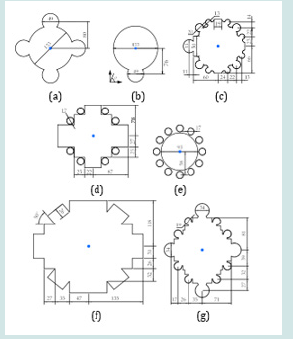
The compound piers under investigation were primarily concave, with some exhibiting starshaped configurations. This allowed for multiple interactions of scattered waves with various parts of these shapes, particularly those where small cylinders are close to the central part. Resonance frequencies were observed, likely resulting from coupling between small cavities on the cylinder surfaces. These localised frequencies enhanced scattered power without favouring any particular direction, especially for wavelengths comparable to geometric elements.
While the study focused on individual obstacles, the possibility of volumetric diffusion through multiple scattering between columns must be considered. In the cathedral, the pier spacing is approximately 5.5 m, suggesting that re-scattered waves would have low intensity compared to other wall reflections in the far field. However, near-field effects, especially for listeners close to an obstacle, and the impact on late reverberation and low-frequency modes remain topics for future investigation.
The numeric simulations assumed a source at infinity, but they aligned with experiments where the source was in the far field, with receivers near the obstacles. In such scenarios, reflections are shown to be audible, particularly in transverse directions where the listener is near an obstacle. These reflections are more discernible due to spectral differences rather than loudness. Human sensitivity to spectral overlap, especially below 1 kHz, plays a significant role.
The audibility of reflections also depends on the relative positions of the source, obstacles, and listener. The possibility of masking by early reflections from the columns and the spatial distribution of these reflections raises questions that merit further investigation. Additionally, studies on room impulse responses and simulations could evaluate the effects of realistic sources and relative positions of elements in a cathedral acoustic environment.
In summary, this study sheds light on the scattering properties of cylindrical obstacles and their audibility in a cathedral-like setting. The interplay between geometry, wavelengths, and listener position highlights the complexity of acoustic interactions in such spaces, opening avenues for further research on architectural acoustics.
Simulating the cathedral through the ages
Modern visitors tend to conceptualize a cathedral as a still and constant witness to history. However, the societies that maintained the building over centuries have all left their marks on the cathedral, from architectural renovations to politically motivated redecoration, repurposing, and damages. To modify the cathedral is to participate in a cultural legacy of continuous change.
Using the measurements described a geometric acoustic model of the cathedral was first created and calibrated to serve as a digital reconstruction of the building by Postma and Katz (2015) (36). Subsequent work by Canfield Dafilou et al. (2022), Mullins et al. (2022a) (37,38) on the historical acoustics of Notre- Dame refined this initial model, featuring alterations in interior geometry, closure of lateral chapels, inclusion of the cloture and rood screen, reshaping of choir stalls, and other details. Additional measurements of historical materials and supporting archival documentation are used to modify the simulations, adapting the model to the cathedral’s historical or future states. To date, a total of thirteen acoustic models spanning the time period from before Notre-Dame was built in ca. 1163 AD to ca. 1712 AD have been created (see Figure 6a) (Mullins, 2024) (39).
Figure 9: Several acoustic simulation models and overview of reverberation time results.
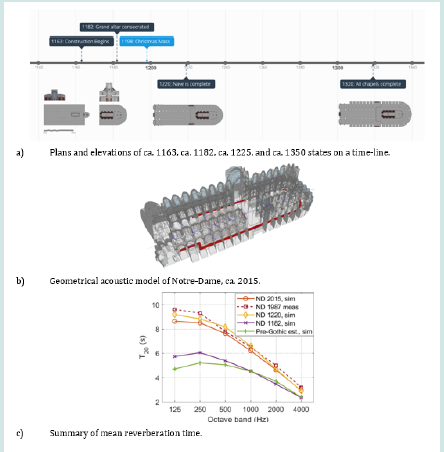
The ca. 1163 model is a speculative one based on the foundations of a massive basilica found in archaeological digs in 1847 AD (Barbier et al., 2019, Hubert, 1964, Sandron, 2021) (40-42). Acoustic measurements and architectural plans of an extant and contemporaneous building of a similar architectural style (Cirillo and Martellotta, 2005) (43) were used to create a calibrated model of the stand-in church, which was then modified to match the architecture of the ruins below Notre-Dame (Mullins and Katz) (44). All models after ca. 1163 AD are based on the GA model reported in Postma and Katz (2016) (45) and subsequently modified to match the historical states as discussed in Canfield Dafilou et al. (2022, 2023), Mullins et al. (2022b) (37,46,47). These models allow examination of the acoustic evolution of the cathedral over generations, yielding insights into the experience of previous societies at the church.
Evolving architecture in light of speech and musical clarity
Canfield-Dafilou et al. (2024) (48) presented an interdisciplinary exploration of how the cathedral’s architectural evolution influenced the practice and intelligibility of preaching over the centuries. By integrating historical documentation with acoustic analysis, the study examines how changes in the cathedral’s structure and liturgical practices affected spoken word transmission within the sacred space.
The developments of Notre-Dame’s interior are detailed, noting how modifications such as the addition of choir screens and alterations in seating arrangements impacted the acoustic environment. These architectural changes, coupled with evolving liturgical practices, influenced how sermons were delivered and perceived by congregants. The study highlights the dynamic interplay between physical space and religious practice, emphasising that the cathedral’s acoustics were not static but evolved alongside its architectural and functional transformations.
To assess the acoustic implications of these historical changes, a combination of archival research and acoustic modelling are employed, reconstructing past configurations of the cathedral to simulate how sound would have propagated during different periods. This methodological approach allows for a nuanced understanding of how architectural elements either facilitated or hindered speech intelligibility, shedding light on the challenges faced by preachers in engaging their audiences effectively. Results contribute significantly to the field of acoustic heritage by demonstrating the importance of considering both historical context and physical acoustics in understanding the auditory experiences of past congregations, underscoring the value of interdisciplinary research in uncovering the complex relationships between architecture, sound, and religious practice. This study not only enriches our comprehension of Notre-Dame’s acoustic history but also provides a framework for analysing other historical spaces where spoken word played a central role.
Going beyond studies of preaching and singing, d’Alessandro et al. (2025) (49) investigated the influence of organ placement on the acoustics within Notre-Dame de Paris through historically informed simulation methods, examining various historically plausible organ positions. Using geometric acoustic modelling based on detailed architectural reconstructions of the 13th-century cathedral, simulations are analysed with respect to the predicted auditory experience from both listener and performer perspectives.
Results reveal significant acoustic differences between the proposed positions, especially in terms of clarity, envelopment, and intelligibility. The rood screen position offers strong frontal localisation and acoustic support within the choir, aligning with liturgical practices of the time. In contrast, the gallery location provides a more immersive and spatially diffuse experience for the nave congregation, which may correspond to later periods when the focus of musical practice had shifted. These results suggest that changes in organ placement were not merely architectural or aesthetic decisions, but integral to evolving liturgical and musical functions.
Beyond specific findings about Notre-Dame, the study demonstrates the potential of archeoacoustic simulation as a method for testing historical hypotheses about music and space. By integrating historical research with spatial acoustics, it offers a compelling case for the methodological rigour and interpretive richness that digital acoustic reconstructions can bring to historical musicology and heritage studies. This approach contributes to a broader understanding of how sound shaped and was shaped by sacred architecture, particularly within the high-Gothic tradition.
Soundscapes Under Construction
The Archaeology of Soundscapes
The archaeology of soundscapes is the study and analysis of soundscapes from the past. It allows for the (re)creation of historical soundscapes. These reconstructions are working hypotheses, meaning they are subject to change based on new scientific data or interpretations of the sources that have been used to create them. UNESCO’s resolution on the safeguarding of intangible cultural heritage emphasizes the notion of authenticity. In this regard, the archaeology of soundscapes contributes to the preservation of this heritage, being involved in its safeguarding and promotion, offering the opportunity for a plausible reconstruction of potential historical heritage, a possible historical reality, while preserving its authenticity.
The archaeology of soundscapes is, at first regard, a study of soundscapes as defined by the ISO standard 12913-1 (ISO, 2014) (50), which provides definitions and conceptual frameworks for Acoustics and Soundscapes, emphasizing the idea of perceptual construction and the fact that a soundscape exists only through human perception of that acoustic environment. Secondly, based on the previous definition, audible models can be proposed regardless of the chosen mode of dissemination.
The specificity of soundscape archaeology, like archaeology in general, is to study and understand the past but from a sensory perspective. In the current case regarding Cathedrale Notre- Dame de Paris, this involves studying and analysing the sounds and soundscapes based on what can be found in the traces left behind (especially in archives) and what remains of the reality of the past. These traces can be found in the historical record (archive excavations) and in the present (recordings). Soundscapes presented for listening do not fall into the category of sound effects or sound design. All the sounds, foreground and background that make up these soundscapes have been recorded because they are still present and are the subject of specific recording campaigns. This allows simultaneously to carry out a conservation campaign, particularly in the context of preserving intangible cultural heritage. If, for some reason, the profession, tool, or practice under consideration has disappeared, it is neither artificially recreated (sound effects or sound design) nor synthesised (sound design). It is an empty trace, a kind of “gap” left in the sound fresco, indicative of a lack of scientific data and fully acknowledged by archaeologists. However, this “gap” is not detrimental to listening, as our natural acoustic environment, both present and past, consists of dozens of sounds, some masked or filtered by our ears and brain.
Sensory Recontextualisation: A Multistep Process
The aim of soundscape archaeology is to allow for a precise recontextualisation through sensory experiences, immersing ourselves in history — as in the case of Notre-Dame, for example — to understand the monument, its evolution, the lives of all those who contributed both inside and outside the cathedral, as well as its placement within the urban environment, and to highlight existing sound interactions and their evolution. Initially, it is necessary to draw upon various sources to uncover information and understand the connections and interactions that may have existed. However, defining the constraints limiting the research and reconstruction scope is necessary before beginning excavations. In other words, three areas need to be established (see Figure 7):
Figure 10: Geographical, temporal, and reconstruction delimitation of study perimeters for the case of Notre-Dame.
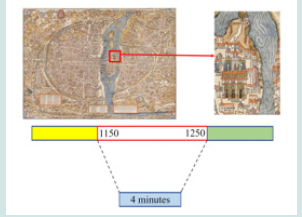
1. Geographical (e.g., Notre-Dame and its surroundings)
2. Temporal (according to the periods agreed upon by different actors and researchers)
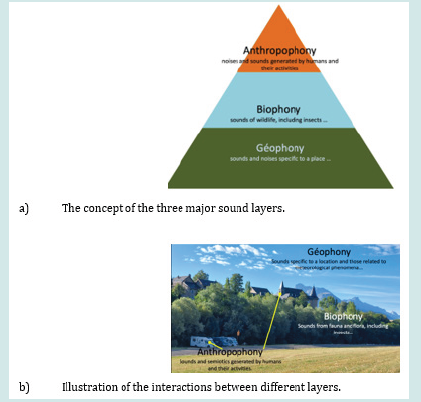
3. Duration of reconstruction (the length of the sound fresco) Following this initial step, the three major “layers” of sounds in the historic reconstructed soundscape can be distinguished (Krause, 2013) (51), each with its own characteristics (see Figure 8a):
• Geophony: Sounds specific to a location and those related to meteorological phenomena.
• Biophony: Sounds from fauna and flora, including insects.
• Anthropophony: Sounds and semiotics generated by humans and their activities.
Research in heterogeneous archives (textual and iconographic) is necessary to decipher this sonic past, understand it, grasp the details, and in this way, feed the previously mentioned layers to recreate the density and existing interactions. Each layer (geophony, biophony, and anthropophony) thus becomes a multi-layered structure representing a location’s soundscape at a given moment. In this way, it is possible to recreate soundscapes that are close to a possible reality — that is, as rich and fullbodied as a contemporary soundscape. Following this detailed process (source research, information cross-referencing, validation), a map of sound scenes can be proposed, including the spatialisation of activities within the territory (see Figure 8b). From these “sound maps,” they are then rendered audible. To accomplish this, one must rediscover the sounds from the past that are still present today with which recording are made. Given this collection of sonic information, it is then possible to envision the composition of a specific sound history, arranging them to create sonic narratives (heterography).
Figure 11: The three major “layers” of sounds, that, through porosity, form an ambiance, a soundscape environment.
Soundscape Archaeology: A History-Based Methodology
All the fundamental steps that allow for the establishment of the framework and scope of research, the narration, and the dissemination of this sonic narrative follow rigorous rules. The exercise is not straightforward: sound and soundscapes contain all the ingredients that can stimulate the imagination and systematically trigger emotional factors (often related to memory the famous “Proust’s madeleine”5 phenomenon also applies to sounds). Therefore, each step is rigorously constructed, traversed, and validated with scientific rigour. The three major steps in the employed methodology are:
1. Collection
• Information research and validation
• Their “mapping”
• Research and recording of sounds in the present day
2. Scripting
• Heterography – or writing of the sensory narration
3. Dissemination
• Spatialization stages
• Choice of dissemination media
The Comfort of Archives: The collection is divided into two major stages: a “static” one and a more “dynamic” one in the field in the form of recording campaigns and data collection. The first collection occurs in the archives (textual or iconographic). In the case of Notre-Dame, this work relied on the expertise of historians who specialize in this era; the texts are not in French (often in Latin); the handwriting is difficult to decipher (there are no printed texts yet), and only specialists have the decryption keys. It is easier to read iconography6, especially since it is relatively rich. During the research and information collection, if there is any doubt about a sonic clue (information that is difficult to cross reference or find in other sources, for example), it will not be validated, and the unconfirmed clues will not be included in the narrative that should give birth to the sound fresco.
Field Recordings: The second stage occurs in the field and involves recordings and data collection. Initially, one first identifies the professions and actors from the past that still exist today, and then conducts field recording campaigns. For the medieval construction Notre-Dame, the preferred partner in the project has been the experimental archaeological site of Guedelon in Yonne.
Foot Notes
5.The expression “Proust’s madeleine” describes any phenomenon that triggers an impression of remainscence. It can be an element of everyday life an object, a gesture, a sound, or a colour, for example – that is bound to bring back or reactivate a memory, just as a madeleine cake does for the narrator of A la recherche du temps perdu in Du cote de chez Swann (1913), the first volume of Marcel Proust’s novel. (translation, fr.wikipedia.org/wiki/Madeleine de Proust, accessed 2023-10-20.
6.To decipher and understand how to read sensory experiences in medieval iconography, refer to (73).
Conducting a recording campaign is a complex operation that requires various tools and media not traditionally found in the toolkit of humanities and social science researchers. Unlike anthropologists or sociologists who rely on recordings for their interviews and studies, this is not just one microphone (or a dictaphone); to accurately capture the acoustic actions one often operates with several microphones combined to obtain the desired result. To complement these recordings, recontextualise them, document them, and conduct a sensory study, metadata forms (filled out before, during, and after the mission) were developed over the course of three years, providing a common strategy for these field practices.
Recording campaigns are carried out following a standardised protocol. Prior to fieldwork, the gesture or object is analysed and documented to anticipate onsite conditions, understand the gesture, select suitable microphones (type, directivity, timbre), and plan preliminary microphone placement. Once this preparation is complete, field operations begin. Onsite, initial observations are refined through detailed documentation of the location, object, and gestures. Extended discussions with the artisan help clarify the phases of their work, enable close positioning of equipment, and establish mutual trust—essential for capturing gestures naturally. Only after this phase, whose duration may vary, are microphones deployed. Equipment choices and placement strategies are adjusted as needed based on field conditions.
Recontextualisation of the Recording Location: The same approach is always followed, regardless of the objects, gestures, trades, or mechanical devices to be recorded. The goal is the ability to capture (and subsequently reproduce) sound in all its colours, frequency richness, and density. In addition to their use in historical soundscape reconstructs, these recordings also document the soundscapes, enriching the geophony.
The preparation and conduct of these sessions require significant preparation in advance to understand the gesture or define the object to be recorded. The choice of microphones depends on the target to be recorded and its location. Each audio recording is complemented by one or more video sequences, a preparatory form, and a field data entry form. After the recording mission, a descriptive and analytical form are prepared, a critical element necessary to adapt the recording techniques to the obtained results and improve them. This rich multimedia material contributes to an entire production chain that goes beyond the mere presentation of a sound landscape, such as in the PROMESS (Protocoles Mesurant l’impact du multiSensoriel dans le patrimoine culturel) project (Javerliat et al., 2023) (52). These field recordings are then aggregated to create a sonic narrative using the practice of heterography.
Heterography: Developing a Sensory Narrative Heterography “privileges the analysis of the sensory relationship with the materiality of texts before its rational reading”7. In the Notre-Dame case, heterography involves transcending any medium (textual, iconographic, etc.) through one or more senses, giving it a sensory reality. In this context, it is hearing and sound that are engaged.
Case Study: The 12th century Notre-Dame Construction Site
Building on the experience and methodologies developed in prior research projects (Pardoen, 2017, 2019) (53,54), notably the Bretez project8 for the creation of sound frescoes and the ESPHAISTOSS (Etu de et analyse Sensorielle des metiers du Patrimoine Historique (bAtiet et artISanat d’arT) et leur restitutiOn Sonore et Sauvegarde numerique9) project for the recording of sound objects, the study of the Notre-Dame sound-scape aimed to recreate the soundscapes of several periods identified by the Acoustics working group. The first period (1163–1182) will be an example, where the soundscape archaeology focuses on the ambiance of the construction site (the exterior, for simplification) and that of the interior (both of the construction site and the worship space once the choir/apse is consecrated). In this example, only the exterior ambiances are presented. The geographical space around Notre- Dame in the 12th century is very different from today (see Figure 9). Over time, it has undergone numerous transformations – expansion of the area, changes in urban construction, and more (Dupuy, 1900) (55). Despite these changes, it remains similar regarding surface area, urban morphology, and population density. Thus, compared to today, one has:
Foot Notes
7.Summary of the 4th cover of Bouza Alvarez, Fernando, Heterographies - Formes de l’ecrit au Siecle d’or espagnol (trans. Saint-Lu, Jean-Marie), 2010, casa de Velazquez, XXIV-138 pages.
8.www.msh-lse.fr/projets/bretez.
9.archeoson.hypotheses.org/esphaistoss.
Figure 12: Plan of the Ile de la Cite circa 1170: the urban area to the north, the paleochristian basilica to the west, the “Terrain” (or “Moette aux papelards”) to the east in green, and the Seine in blue. A dashed brown line marks the contemporary quay.
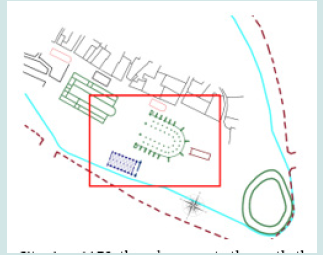
To the north, an urban neighbourhood (the only one that has preserved the same distance between the cathedral and houses).
• To the south, the river Seine is much closer to the building and does not have a stone embankment but rather a slightly sloping riverbank.
• To the east, an area called “Terrain” (a sort of mound about 10 m high).
• To the west, besides the old paleochristian basilica, an area called the “chantier” (construction site) and a river port.
In the 12th century, the geographical area of Notre-Dame, which covered about 5 hectares, was elevated in its northern and eastern parts and sloped gently toward the Seine. Three bridges served the site: the Petit Pont (wooden until 1181, then stone), the Pont au Change (wooden and stone), and the Pont Notre-Dame (wooden until the 14th century, according to sources). There is also evidence of a port (located between the Petit Pont and the Pont Double, appearing later) and an area known as “Terrain” or “Motte aux Papelards” (located at the island’s eastern end). This area could have served as a landing site for certain materials, including long wooden beams for rafting. It is worth noting that there were no paved roads. The Gallo-Roman paving was sporadic, and it was not until 1185, during the reign of Philippe Auguste, that the paving of the Crossroads of Paris transformed the major Parisian thoroughfares.
Within this study area, several places of worship existed well before the cathedral’s construction: Saint-Etienne (a chapel at the site of Notre-Dame), Saint-Jean Le Rond (a church north of the future cathedral), and Sainte-Marie (encroaching on the forecourt). To build Notre-Dame. a demolition/deconstruction phase had to be carried out simultaneously with the elevation phase and the foundation trenches (10 m deep). This simultaneous construction allowed for the gradual and continuous transformation of the landscape and, consequently, the Sound-scape. Thus, between 1163 and 1182, the space served construction and worship. After 1182, Notre-Dame became a hybrid zone (dedicated to worship, as the choir/apse was used for worship, while the cathedral continued to rise to build the transept, nave, and towers). With this urban landscape set, we can examine human presence and activities on the construction site. This medieval construction site was a social space. It was not “closed to the public”; it was an open place where adults (men and women) and children could be found. The construction site was a place of life.
The main actors on the site were the carpenters present throughout the construction site (scaffolding, carpentry, major works such as assembling and fitting the trusses, and peripheral activities). Their work ranged from logging (hewing) to sawing (both for beams and boards). Next were the stone cutters. Although stone was not extracted and carved on-site, stone carving (for blocks and sculptures) was widespread. Whether the stone was hard or soft, it was subjected to the attacks of drills, chisels, wedges, and other mallets, creating a symphony of percussion. Masons (from mixing to masonry itself, i.e., stone laying) also contributed various sound information. Blacksmiths were involved at various levels: forging tools and large pieces, providing staples, nails, and small objects. They also worked on maintenance, reshaping, sharpening, and honing. The installation of forges and the use of portable forges were essential on the construction site. Blacksmiths moved aroundthe site, carrying their small hand bellows and sounding anvil.
Other trades were present and probably much less noisy: wood carvers, rope makers, various workers, carts, and other transport equipment (goats, squirrel cage lifting wheels, etc.) also added their murmurs and creaks to the soundscape. All these elements should be included to recreate the soundscapes of the past. New investigations must be conducted in the present day and out in the field, not just in the archives.
Results of this research into historically informed soundscape reconstructions is best understood through experience. Examples of these reconstructions can be found on-line, including:
• Soundscape of the Notre-Dame construction site in 1170 – The Seine 10
• Soundscape of the Notre-Dame building site in 1170 – The courtyard 11
• Fresco of the construction site – interior of Notre-Dame de Paris circa 1170 12
• Fresco of the Notre-Dame restoration site, circa 1850 13
Experimental Virtual Archaeological Acoustics
Historically informed simulations can be a powerful tool for historical studies, providing re- searchers with a sensory presentation of sound that was previously only available through description and supposition.
Singing and architecture: In parallel with the construction of the cathedral, a new genre of music developed among the musicians of Notre-Dame. Known as the Ecole de Notre-Dame, these composers and musicians pioneered a virtuoso style of singing that embellished established melodies with prescribed and notated polyphonic ornamentation (known today as Organum Notre-Dame.
The defining feature of Ecole de Notre-Dame Music lies in its incorporation of organum above the tenor or plainchant component. This represents a notable departure from earlier polyphonic compositions, where the organal part predominantly featured parallel fourths, as exemplified in works like Musica Enchiriadis by Hucbald de St Amand and Micrologus by Guido d’Arezzo. In those compositions, the ambitus, or the range of pitch intervals, was limited to a maximum of a fifth.
In contrast, the organum of Notre-Dame introduced significant innovations by incorporating intervals of unison, fourth, fifth, eighth, eleventh, and twelfth—effectively expanding the ambitus to its maximum extent for vocal music. These novel polyphonic elements resulted in higher pitches and an expanded ambitus for the musical repertoire.
Working with musicologists, acoustic simulations were used to study the potential relationship between these musicians and the reconstructed acoustics Notre-Dame and its predecessor (Nunes- Le Page et al., 2024) (56). These experiments used real-time, immersive virtual acoustic environments to allow singers to perform as an ensemble in the different simulated acoustic conditions. A choir specialising in medieval singing was studied as they sang Organum Purum and Organum Notre-Dame in varying acoustics. Analysis of musical parameters extracted from their recordings helps examine what influence the different architectures may have had on musicians’ performances. Listening tests with specialists focus on the differences in the suitability of music styles to historical acoustic conditions. In this way, it is hoped to provide a new level of insight into the cathedral’s interconnected domains of culture and acoustics in the past.
Over the past years, a technological frame work to support the real-time performance study with four singers has been developed. To analyse the vocal recordings for variations in musical performance, it was necessary to ensure that each singer’s voice was clearly recorded with minimal impact of the other vocalist’s voices present in the background. Determining the correct balance between post-recording analysis and during-recording comfort for the singers took multiple iterations. (Billiet et al., 2022, Eley et al., 2021, Mullins and Katz, 2023, Mullins et al., 2021, 2023) (57-61).
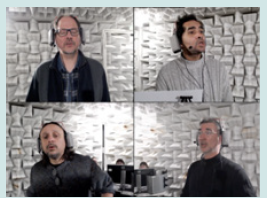
These initial evaluations allowed for the implementation of a full experiment involving an expanded selection of vocalists (the original choir and a second choir), which occurred in January and February of 2023 (Figure 10). The choirs prepared excerpts of the plainchant Invenit se Augustinus, Perotin’s Viderunt Omnes, and Billard’s Salve Virgo14. These excerpts were chosen to be broadly representative of the liturgical music performed in the cathedral over the period from ca. 1163-ca. 1400. While it is likely that Viderunt Omnes (and by extension, likely Salve Virgo) were performed at the cathedral after their respective composers died (Baltzer, 1990) (62), the two later pieces are representative of styles that developed on a known timeline: Perotin’s Viderunt was likely composed for either the pre-Gothic basilica or Notre-Dame ca. 1198, and Billard’s Salve Virgo could not have been performed in any of the periods save the last, after ca. 1350. These music choices allow for the examination of the hypothesis that music composed for one version of the cathedral is best performed in that version.
Foot Notes
10.https://soundcloud.com/esphaistoss/paysage-sonore-du-chantier-du-notre-dame-en-1170-la-seine.
11.https://soundcloud.com/esphaistoss/paysage-sonore-du-chantier-du-notre-dame-en-1170-le-parvis.
12.https://soundcloud.com/esphaistoss/fresque-du-chantier-de-construction-interieur-de-notre-dame-vers-117.
13.https://soundcloud.com/esphaistoss/fresque-du-chantier-de-restauration-de-notre-dame-vers-1850.
14.Invenit se Augustinus, Plainchant for the use at Notre Dame of Paris cathedral, Paris Breviairy-Paris, BnF, ms. latin 15182, fol. 327, ca. 1300 gallica.bnf.fr/ ark:/12148/btv1b8447769r/f655.image; Viderunt omnes Perotin (late 12th, early 13th c.), four-part organum, gradual- responsory for Christmas mass – Notre Dame of Paris cathedral, Florence, Bibl. Medicea-Laurenziana, Pluteus 29.1, fols. 1-4, ca. 1250; Salve virgo virginum / Vita via / Salve regina / Vitavia – Aubert Billard (cleric and chaplain at Notre Dame of Paris cathedral, between 1392 and 1394), four-part Marial Motet, Oxford, Ms Canonici Misc. 213, fols. 114v-115, ca. 1430.
Figure 13: a)Configuration of 4-member choir during immersive auralization singing.
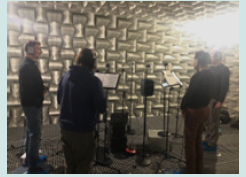
Figure 14: b)Closeup of singers during the experiment. Figure 10: Interactive auralizations with singers.
Perceptual Evaluation of Reconstructed Acoustics in Medieval Polyphony
Mullins and Katz (2025b) (63) presented the perceptual evaluation of medieval music within historically simulated acoustic environments of the Cathedrale Notre-Dame de Paris, aiming to assess how reverberant conditions influence listener judgements of musical style and affect. Using acoustic reconstructions from three temporal states of the cathedral—spanning from the 13th to the 18th century the listening experiment involved both expert and non-expert participants.
Stimuli consisted of paired excerpts of sacred vocal repertoire— Gregorian chant, organum, and later polyphonic works—convolved with each acoustic simulation and presented via high-quality binaural rendering. Participants rated each excerpt along multiple perceptual axes, including stylistic appropriateness, emotional tone (e.g., solemnity, transcendence), clarity, and immersion.
The results revealed several notable patterns. Firstly, listeners consistently associated earlier repertoires (such as plainchant and early organum) with older acoustics (e.g., 13th-century IRs), suggesting a tacit matching of musical texture with reverberant profile. Secondly, acoustics with longer reverberation and greater spatial diffusion were more likely to evoke affective descriptors such as “awe” or “mystery”, whereas clearer, more intelligible spaces were associated with “intimacy” or “devotion”. These findings held across expertise groups, though trained listeners showed more differentiated responses based on historical knowledge.
Crucially, the study demonstrates that listeners can form coherent and historically plausible associations between soundscape and repertoire, even when deprived of visual or contextual cues. It thus offers empirical support for the musicological hypothesis that early sacred music was composed with specific acoustic environments in mind, and conversely, that listeners today are capable of perceiving stylistic affordances embedded in reverberant context.
From a methodological standpoint, the study provide a robust experimental protocol for evaluating perceptual responses to simulated acoustics, integrating architectural modelling, musical curation, and statistical analysis. The study contributes significantly to the field of virtual acoustics and historical music cognition, bridging the gap between acoustic modelling and human perception.
Ensemble Synchronization in Simulated Medieval Acoustics
Mullins and Katz (2025a) (64) addressed the situation from the historically informed performance musicians point of view, concentrating on how small vocal ensembles synchronise their entrances and maintain rhythmic cohesion when performing medieval music in reverberant environments such as those found in Notre-Dame de Paris. A controlled performance experiment using virtual acoustics to simulate three historical configurationsof Cathedrale Notre-Dame de Paris, each representing different stages of the cathedral’s architectural evolution and corresponding changes in reverberation characteristics was carried out.
Professional early music singers were recorded performing in a spatially dry studio environment, then exposed to the simulated acoustics via real-time convolution monitoring. Their performances were analysed for onset synchrony, inter-onset intervals, and microtiming deviations across voice parts. Repertoire was drawn from the Notre-Dame school of polyphony, particularly pieces involving staggered or parallel entries (e.g., duplum and triplum textures), which are especially sensitive to timing discrepancies.
Quantitative analysis showed a marked increase in asynchrony under acoustically “older” conditions—that is, those with longer reverberation times and reduced clarity. Specifically, the onset spread between singers increased by up to 30 ms in the most reverberant setting compared to the least. These effects were more pronounced during passages involving non-homorhythmic textures or when vocal entries were separated by rests. Interviews with participants confirmed a perceived increase in difficulty aligning entries, even among highly experienced ensemble singers.
Importantly, the study does not merely observe degradation of performance quality, but highlights adaptive strategies employed by performers, such as increased visual coordination, reliance on internal pulse, and modified articulation. These findings support the hypothesis that musical forms and performance techniques were conditioned by their acoustic contexts, with composers possibly favouring isochronic rhythms and redundant cues to enhance synchrony in challenging reverberant settings.
The work contributes a rigorous experimental framework for analysing ensemble coordination in virtual acoustic environments, advancing our understanding of how sound spaces constrain and shape musical performance. It offers valuable insight for both historical performance practice and the design of future studies examining performer-environment interaction.
A systematic examination of the room acoustic parameters computed for historical models provides valuable insights into the acoustic conditions of Notre-Dame during its early years, particularly concerning its suitability for this new musical form. While the acoustic properties of the basilica-style cathedral that previously occupied the site were deemed acceptable, significant alterations occurred in energy distribution and reverberation times within the cathedral. The reduction in reverberation time in proximity to the singers’ positions and enhanced support due to architectural modifications created an environment conducive to clear auditory feedback among singers while still offering the satisfaction of an extended reverberant tail. Consequently, the architectural transformation marked an improvement in acoustics compared to the basilicas previously present at the site before the construction of Notre-Dame.
Popularization & Mediatisation
In addition to the scientific aims, the historical acoustic reconstructions of Notre-Dame have been used to draw awareness to the cultural significance of the aural history of the cathedral. This includes a virtual fly-through in the cathedral while listening to an extract from a performance of Massenet’s oratorio La Vierge, (see Figure 11a). The intention of this production (entitled “Ghost Orchestra”15) was to capture the acoustics of the cathedral and how they vary according to the position of the sound source and the listener (Katz et al., 2016, Postma et al., 2016) (65,66). An extended audio-only version of the production Katz et al. (2021) (67) offers the entire concert from several fixed positions. this extension was produced during the COVID lockdown16. The selected piece of music, actually performed at Notre-Dame for its 850th anniversary, offers a unique experience with musicians positioned both in the transept and in the liturgical choir, in addition to several movements where soloists are positioned high up in the galleries, offering spatially variable sources and a truly immersive experience.
In Katz et al. (2024a) (68), several narrative uses of the acoustic simulations of Notre-Dame, termed an acoustic digital twin, are detailed, positioning it as a powerful tool for both scholarly interpretation and public engagement. One key application lies in the historical re-enactment of past soundscapes. By simulating liturgical or musical performances within different architectural configurations of Notre-Dame, the acoustic twin allows researchers and audiences alike to explore how the sonic environment of the cathedral has changed over time, and how those changes influenced religious, social, and musical practices. These reconstructions provide a framework for telling historical stories through sound, grounding them in acoustically plausible contexts.
Foot Notes
15.www.lam.jussieu.fr/Projets/GhostOrchestra.
16.lavierge2020.pasthasears.eu.
Figure 15: a)Ghost Orchestra visual rendering for 360◦ video production.
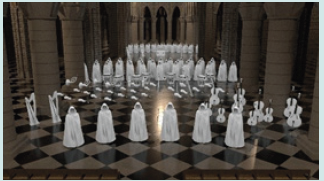
Figure 16: b)Vaulted Harmonies rendering for virtual concert film production. Figure 11: Visual renderings from arhaeoacoutic Notre-Dame productions.
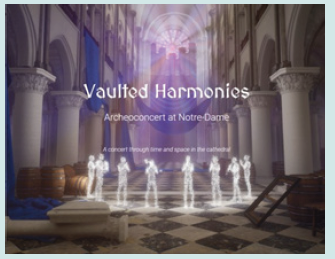
This extends beyond the construction of historical soundscapes as described in Section 3, where the narrative use is developed in heritage mediation, with the acoustic twin supporting immersive and interpretive storytelling. By embedding auralisations into interactive or multimedia platforms, sound becomes a central component of public-facing narratives that aim to convey the lived experience of the cathedral.
This approach allows users to explore Notre-Dame not only as a physical structure but as a resonant cultural space, heard as it might have been centuries ago. Such mediated experiences are not limited to factual reconstruction; they also invite a degree of sonic imagination.
The previously-described soundscape and architectural acoustic reconstructions of Cathedrale Notre-Dame de Paris have been incorporated in the production of a short series of audio dramas, placing the efforts of the scientific team in an easily accessible format. “Looking for Notre-Dame”17 plunges us into the mind of the young Victor Hugo as he begins work on his future “cathedral novel” Notre-Dame de Paris. This fictional work uses historical reconstructions to provide context and engage the listener to become inquisitive about the acoustic history of the cathedral, providing links to scientific publications for those interested.
A subsequent public work described in detail is the production of a geolocalised audio guide, “Whispers of the Past at Notre- Dame”18, an immersive experience in the sonic memories of the Cathedrale Notre-Dame de Paris (Peichert, 2023) (69). With this production, visitors are presented with a museographic presentation of the history, acoustic and otherwise, of Notre-Dame through the embodied persona of the cathedral as she presents various memories from the early days of the initial construction up until the modern-day reconstruction after the fire. As with the audio-fiction, curious visitors are provided with further details and references through the application, providing a direct link to the significant interdisciplinary research carried out in creating the historical soundscape reconstruction and associated studies.
Foot Notes
17.lookingfornotredame.pasthasears.eu.
18.sup> whispersnd.pasthasears.eu.
These productions emphasise the affective and imaginative potential of sound in historical storytelling. By enabling listeners to figuratively inhabit the role of a medieval congregant or a choir member, the acoustic twin fosters a form of embodied historical empathy. This form of narrative use expands beyond strict documentary aims and gestures towards a more speculative or experiential mode of heritage interpretation, where hearing becomes a pathway to deeper cultural understanding.
The final production for general audiences details a virtual concert, presenting the evolution of music and acoustics within Notre-Dame over more than eight centuries (Katz et al., 2024b, Poirier Quinot et al. (accepted) (70,71). The film, “Vaulted Harmonies”19 presents 11 musical pieces with links to Notre- Dame. Each piece was recorded in a studio using close proximity microphones, and then reconstructed using these recordings with the acoustic digital twin simulation corresponding to the period to create an immersive spatial audio experience. Combining short narrative elements for historical and musicological context, the visual renderings (see Figure 11b) follow the architectural and decorative evolution of the cathedral (72). The overall conception and production of this animated film represents a meaningful milestone in what can be achieved for scientific outreach in the fields of archaeoacoustics and virtual heritage.
Vaulted Harmonies is set to be adapted for both VR and dome projection formats in the fall of 2025, a transition made feasible by its original design leveraging Unreal Engine and high-order ambisonics. The primary challenge for the VR version will be maintaining the resolution of both visuals and auralisations despite the software and hardware limitations of current consumer VR devices. For the dome version, the main challenges will include upscaling visual resolution, reimagining the cinematography to prevent cybersickness, and fully leveraging the 3600 field of view offered by dome theatres.
Conclusion
Research into the acoustics of the Cathedrale Notre-Dame de Paris has evolved into a rich interdisciplinary field, blending historical musicology, architectural acoustics, performance studies, and digital simulation. Collectively, these studies not only seek to reconstruct the cathedral’s soundscape, but also to understand how that acoustic environment shaped the development, performance, and perception of medieval music.
The works reviewed here demonstrate a variety of approaches: from detailed physical modelling of Notre-Dame’s acoustical properties, to the use of auralisation and reconstructed acoustic responses in both scholarly analysis and public engagement. More recent studies have added valuable perceptual and performative perspectives. Listener-based experiments suggest that even modern audiences can meaningfully distinguish between repertoires when embedded in historically informed acoustics, while analyses of ensemble performance reveal how reverberation conditions directly affect timing and coordination.
These contributions collectively support the view that Notre- Dame s acoustics were not merely a passive backdrop but an active influence on the composition and transmission of sacred music. The long reverberation times and unique spatial characteristics of the cathedral likely informed the rhythmic, textual, and harmonic structures of the repertoire performed within it. In this light, acoustics are not simply a means of historical reconstruction— they are a primary lens through which the music of the past may be understood.
Following the reopening of the cathedral, studies are now being concluded examining the resulting acoustics after reconstruction. These measurements, combined with historical measurements obtained from archives and the historically informed simulations will provide a detailed overview of how the acoustics of Notre- Dame has evolved over the centuries.
Looking farther forward, continued advances in acoustic modelling, perceptual experimentation, and historically informed performance practice will deepen our understanding of how sound and space interacted in medieval Paris. Moreover, these methods hold potential for broader application to other liturgical and architectural contexts, expanding our capacity to recover and interpret the sensory dimensions of cultural heritage.
Acknowledgments
The authors would like to thank the various researchers who have contributed to the measurements and acoustic modelling of the cathedral: Bart N.J. Postma and Julie Meyer. We would also like to recognize the principal scholars and engineers involved in the many collaborations mentioned here: Valerie Nunes-Le Page for her work on polyphony, Hanna Borne and Cristina Dagalita for their archival research on the evolution of the architecture and decorations of Notre-Dame, Joachim Poutard, Martin Guesney, and Ihsane Coulombel for their help with soundscape recording and mixing, and Jean-Marc Lyzwa for the audio engineering on the “Ghost Orchestra”, “La Vierge 2020”, and “Vaulted Harmonies” productions.
Funding has been provided by the European Union’s Joint Programming Initiative on Cultural Heritage project PHE (The Past Has Ears, Grant No. 20-JPIC-0002-FS, phe.pasthasears.eu), the French project PHEND (The Past Has Ears at Notre-Dame, Grant No. ANR-20-CE38-0014, phend.pasthasears.eu), and the Chantier Scientifique CNRS/MC Notre- Dame.
Foot Notes
19.vaultedharmonies.pasthasears.eu.
References
- B F G Katz (2024) The Past Has Ears An interdisciplinary project in digital archaeoacoustics. In Gothic Ressonances pp.1-23.
- S S Mullins and B F G Katz (2024) The Past Has Ears at Notre-Dame Cathedral: An Interdisciplinary Project in Digital Archaeoacoustics. Acoustics Today, 20(2):49–58, 2024.
- B F G Katz, D Murphy, A Farina (2020) The Past Has Ears (PHE): XR Explorations of acoustic spaces as Cultural Heritage. In L. De Paolis and P. Bourdot, editors, Intl Conf on Augmented Reality, Virtual Reality and Computer Graphics (SALENTO AVR), volume 12243 of Lecture Notes in Computer Science 91-98.
- B F G Katz and A Weber (2020) An acoustic survey of the Cathedrale Notre-Dame de Paris before and after the fire of 2019. Acoustics 2(4): 791-802.
- L Hamayon (1996) Comprendre simplement building acoustics [Simply understanding building acoustics]. Le Moniteur.
- D Mercier (2002) Le livre des techniques du son [The book of sound techniques]. Dunod, 4 edition.
- J Patynen, B F G Katz, T Lokki (2011) Investigations on the balloon as an impulse source. J Acoust Soc Am 129(1): 27-33.
- A Farina (2000) Simultaneous measurement of impulse response and distortion with a swept- sine technique. In Proc Aud Eng Soc con 108.
- P Luizard and B F G Katz (2014) Investigation of the effective aperture area of sliding and hinged doors between coupled spaces. J Acoust Soc Am 136(2): 141.
- A Weber and B F G Katz (2019) Numerical simulation round robin of a coupled volume case as compared to scale model measurements. In Intl Cong Acoustics, pp. 6051-6058.
- A Weber and B F G Katz (2022) Sound scattering by the Gothic piers and columns of the Cathedrale Notre-Dame de Paris. Acoustics 4: 679-703.
- T Cox and P D Antonio (2016) Acoustic Absorbers and Diffusers: Theory, Design and Application. CRC Press.
- J H Rindel (1991) Design of new ceiling reflectors for improved ensemble in a concert hall. Applied Acoustics 34(1): 7-17.
- D T Bradley, M Muller Trapet, J Adelgren, M Vorlander (2014) Comparison of hanging panels and boundary diffusers in a reverberation chamber. Building Acoustics 21(2): 145-152.
- J H Rindel (1986) Attenuation of sound reflections due to diffraction. In Nordic Acoustical Meeting 08.
- H Medwin and C S Clay (1998) Fundamentals of Acoustical Oceanography. Applications of Modern Acoustics. Academic Press, San Diego.
- Acoustics – sound-scattering properties of surfaces – part 1: Measurement of the random- incidence scattering coefficient in a reverberation room. Standard ISO 17497-1:2004, International Organization for Standardization, Geneva, CH, 2004.
- Acoustics – sound-scattering properties of surfaces – part 2: Measurement of the directional diffusion coefficient in a free field. Standard ISO 17497-2:2012, International Organization for Standardization, Geneva, CH, 2012.
- J K Ryu and J Y Jeon (2008) Subjective and objective evaluations of a scattered sound field in a scale model opera house. J Acous Soc Am 124 (3): 1538-1549.
- L Shtrepi, A Astolfi, S Pelzer, R Vitale, M Rychtarikova (2015) Objective and perceptual assessment of the scattered sound field in a simulated concert hall. J Acous Soc Am 138 (3): 1485-1497.
- H J Strutt (1871) XV On the light from the sky, its polarization and colour. The London, Edinburgh, and Dublin Philosophical Magazine and Journal of Science, 41(271):107-120.
- P Morse and K Ingard (1986) Theoretical Acoustics. International series in pure and applied physics. Princeton University Press.
- A Szeląg, T Kamisiński, M Lewińska, J Rubacha, A Pilch (2014) The characteristic of sound reflections from curved reflective panels. Archives of Acoustics, 39(4): 549-558.
- Y Liu (2019) On the BEM for acoustic wave problems. Engineering Analysis with Boundary Elements, 107: 53-62.
- K Yashiro and S Ohkawa (1985) Boundary element method for electromagnetic scattering from cylinders. IEEE Transactions on Antennas and Propagation 33(4): 383-389.
- J M Buchholz (2011) A quantitative analysis of spectral mechanisms involved in auditory detection of coloration by a single wall reflection. Hearing Research 277(1): 192-203.
- S E Olive and F E Toole (1988) The detection of reflections in typical rooms. J Aud Eng Soc.
- D R Begault, B U McClain, M R Anderson (2004) Early reflection thresholds for anechoic and reverberant stimuli within a 3-D sound display. In Proc. 18th Int. Congress on Acoust.
- J Rathsam and L M Wang (2010) Planar reflector panels with convex edges. Acta Acus- tica united with Acustica 96(5): 905-913.
- Bruzelius (1987) The construction of Notre-Dame in Paris. The Art Bulletin 69(4): 540-569.
- L R Hoey (1989) Pier form and vertical wall articulation in-english romanesque architecture. J Soc Architectural Historians 48(3): 258-283.
- M Thurlby (1998) Aspects of the architectural history of Kirkwall cathedral. Proceedings of the So- ciety of Antiquaries of Scotland 127(1): 855-888.
- M Celtibere, M Lemercier, A Hibon, A Ribaud, A Normand, B Bisson (1853) Monographie de Notre-Dame de Paris et de la nouvelle sacristie de MM. Lassus et Viollet-Le-Duc. A. Morel.
- CNRS/MC. Chantier scientifique Notre- Dame de Paris, 2019. https://www. notre-dame.science/.
- D Sandron, A Tallon, L Cook (2020) Notre-Dame Cathedral: Nine Centuries of History. Penn State University Press.
- B N Postma and B F G Katz (2015) Creation and calibration method of virtual acoustic models for historic auralizations. Virtual Reality 19(3): 161-180.
- E K Canfield Dafilou, S S Mullins, B F G Katz (2022) Opening the Lateral Chapels and the Acoustics of Notre-Dame de Paris: 1225–1320. In Proc Symp Ancient Theatres1-5.
- S S Mullins, E K Canfield Dafilou, B F G Katz (2022a) The development of the early acoustics of the chancel in Notre-Dame de Paris: 1160-1230. In Symp the Acoustics of Ancient Theatres, Verona, 2022a.
- S S Mullins (2024) Des voix du passe: the historical acoustics of Notre-Dame de Paris and choral polyphony. Ph.D. Thesis, Sorbonne Universite.
- J Barbier, D Busson, V Soulay (2019) Avant la cathedrale gothique: IVe-XIIe siecle. In Notre Dame de Paris, La Grace dune Cathedrale,pages 17–27. La Nuee Bleue, Strasbourg. ISBN 978-2-8099-0798-8.
- J Hubert (1964) Les origines de Notre-Dame de Paris. Revue dhistoire de l’Eglise de France, tome 50, n°147, 1964.
- D Sandron (2021) Notre-Dame de Paris: histoire et archeologie d’une cathedrale, XIIe-XIVe siecle. L’esprit des lieux. CNRS editions, Paris.
- E Cirillo and F Martellotta (2005) Sound propagation and energy relations in churches. J Acoust Soc Am, 118(1): 232-248.
- S S Mullins and B F G Katz. Proxy churches as tools for historical virtual acoustic reconstruction: The 12th-century acoustics of Notre-Dame de paris. In Cong. Acoust. / Acoust. Soc. Am.
- B Postma and B F G Katz (2016) Acoustics of Notre-Dame Cathedral de Paris. In Intl Cong Acoust, pages 0269: 1-10.
- E K Canfield Dafilou, S S Mullins, B F G Katz (2023) Can you hear the paintings? The effect of votive offerings on the acoustics of Notre-Dame. In Proc Forum Acousticum 1-9.
- S S Mullins, E K Canfield Dafilou, B F G Katz (2022b) The Development of the Early Acoustics of the Chancel in Notre-Dame de Paris: 1160–1230. In Proc Symp Ancient The- atres5.
- E K Canfield-Dafilou, B F G Katz, B C Chevallier (2024) History and Acoustics of Preaching in Notre-Dame de Paris. Heritage 7(12): 6614-6628. SI: Joint issue Heritage/Acoustics journals, The Past Has Ears: Archaeoacoustics and Acoustic Heritage.
- C d’Alessandro, E K Canfield Dafilou, S S Mullins, B F G Katz (2025) The position of Gothic organs in Notre-Dame de Paris: architectural evidence, acoustic simulations, and musical consequences. Applied Acoustics 231: 110506:1-10. SI: Selected papers on RoomAcoustics at Forum Acusticum 2023
- Acoustics — soundscape — part 1: Definition and conceptual framework. Standard ISO 12913-1:2014, International Organization for Standardization, Geneva, CH, 2014.
- B Krause (2013) Le grand orchestre animal. Flammarion.
- C Javerliat, P Raimbaud, P P Elst, E Zimmermann, S Villenave, et al. (2023) Immersive Multisensory Digital Twins: concept, methods and case study. In ACM International Conference on Interactive Media Experiences Work- shops, Nantes (France), France.
- M Pardoen (2017) Archeologie du paysage sonore. reconstruire le son du passe. Revue de la BNF, 55(2): 30-39. (trans. The archeology of the sonorous landscape. Reconstructing the sound of the past).
- M Pardoen (2019) A sound machine to reproduce history? Reflections on the basis of the Bretez project. In S. Nancy and J. G. de Gasquet, eds., La voix du public en France aux XVIIe et XVIIIe siecles, pages 257-267.
- P Dupuy (1900) Le sol et la croissance de paris. Annales de geographie, 9(46): 340-358.
- V Nunes Le Page, S S Mullins, B F G Katz, F Billiet (2024) Singing in the choir of Notre-Dame at the end of the twelfth century. Experiments and analyses. In Proc. Gothic Ressonances. Zenodo.
- F Billiet, V Le Page, S S Mullins, B F G Katz (2022) Virtual acoustic reconstructions of Notre-Dame cathedral’s past for musicological study. In Music and contexts in the Iberian world medieval and renaissance (MEDyREN) Early Music, Architectural Spaces and New Technologies.
- N Eley, S S Mullins, P Stitt, B F G Katz (2021) Virtual Notre-Dame: Preliminary results of realtime auralization with choir members. In Intl Conf 3D Audio (I3DA) pp. 1-6.
- S S Mullins and B F G Katz (2023) Immersive auralisation for choral ensembles. In IoA Auditorum Acoustics, Athens 45(2): 1-9.
- S S Mullins, V Le Page, J De Muynke, E K Canfield Dafilou, F Billiet, et al. (2021) Preliminary report on the effect of room acoustics on choral performance in Notre-Dame and its pre-Gothic predecessor. Acoust. Am 150(4): A258-A258.
- S S Mullins, E K Canfield Dafilou, B F G Katz (2023) Exploring cultural heritage and restoration of Notre-Dame Cathedral through acoustic digital reconstructions. IoA Bulletin 48-54.
- R A Baltzer (1990) How long was Notre-Dame organum performed? In B. Gillingham and P. Merkley, editors, Beyond the Moon: Festschrift Luther Dittmer, volume LIII, pages 118–143. The Institute of Mediaeval Music.
- S S Mullins and B F G Katz (2025b) Perceptual evaluation of reconstructed acoustics in medieval polyphony. In Intl Sym on Music and Room Acoustics (ISMRA), New Orleans.
- S S Mullins and B F G Katz (2025a) Ensemble synchronization in simulated medieval acoustics. In Intl Sym on Music and Room Acoustics (ISMRA) New Orleans.
- B F G Katz, D Poirier Quinot, J M Lyzwa (2016) Interactive production of the “virtual concert in Notre-Dame”. In Forum Intl du son Multicanal (FISM), number 19, Paris.
- B N Postma, D Poirier Quinot, J Meyer, B F G Katz (2016) Virtual reality performance auralization in a calibrated model of Notre- Dame Cathedral. In Euroregio 6: 1-10.
- B F G Katz, J M Lyzwa, D Poirier Quinot (2021) La Vierge 2020: Reconstructing a virtual concert performance Through Historic Auralisation of Notre-Dame Cathedral. In Intl Conf 3D Audio (I3DA)1-9.
- B F G Katz, C Cros, S Peichert, J De Muynke (2024a) The Past Has Ears at Notre-Dame: Acoustic digital twins for research and narration. Digital Applications in Archaeology and Cultural Heritage, 34: e00369:1-16.SI: Digital Heritage Twins from Artificial Intelligence to Storytelling.
- S Peichert (2023) Whispers of the Past at Notre-Dame: promoting academic research through an immersive audio experience for the general public. In XR Stories’ Culture and Heritage Event, York, UK.
- B F G Katz, D Poirier Quinot, J D Muykne, J M Lyzwa (2024b) The Past Has Ears: de Notre-Dame Whispers a Vaulted Harmonies. In Audio3D’24: Du laboratoire aux applications du quotidien.
- D Poirier Quinot, J M Lyzwa, J Mouscadet, B F G Katz. Vaulted Harmonies: Archaeoacoustic concert in Notre-Dame de Paris. Acoustics, (accepted). SI: Joint issue Heritage/Acoustics journals, The Past Has Ears: Archaeoacoustics and Acoustic Heritage.
- B F G Katz, D Poirier Quinot, J D Muykne, J M Lyzwa (2024) The Past Has Ears: de Notre-Dame Whispers a Vaulted Harmonies. In Audio3D’24: Du laboratoire aux applications du quotidien.
- C Lupant (2010) Reflexions sur l’utilisation des sens dans l’iconographie medievale. Communications (86): 65-80.

Editorial Manager:
Email:
archaeology@lupinepublishers.com
archaeology@lupinepublisher.com

-

Mark E Smith
Bio chemistry
University of Texas Medical Branch, USA -

Lawrence A Presley
Department of Criminal Justice
Liberty University, USA -

Thomas W Miller
Department of Psychiatry
University of Kentucky, USA -
Gjumrakch Aliev
Department of Medicine
Gally International Biomedical Research & Consulting LLC, USA -
Christopher Bryant
Department of Urbanisation and Agricultural
Montreal university, USA -

Robert William Frare
Oral & Maxillofacial Pathology
New York University, USA -

Rudolph Modesto Navari
Gastroenterology and Hepatology
University of Alabama, UK -
Andrew Hague
Department of Medicine
Universities of Bradford, UK -

George Gregory Buttigieg
Maltese College of Obstetrics and Gynaecology, Europe -

Chen-Hsiung Yeh
Oncology
Circulogene Theranostics, England -
.png)
Emilio Bucio-Carrillo
Radiation Chemistry
National University of Mexico, USA -
.jpg)
Casey J Grenier
Analytical Chemistry
Wentworth Institute of Technology, USA -

Hany Atalah
Minimally Invasive Surgery
Mercer University school of Medicine, USA -

Abu-Hussein Muhamad
Pediatric Dentistry
University of Athens , Greece