
 Email Us: info@lupinepublishers.com
 Call Us: +1 (914) 407-6109
57 West 57th Street, 3rd floor, New York - NY 10019, USA
Call Us: +1 (914) 407-6109
57 West 57th Street, 3rd floor, New York - NY 10019, USA


Lupine Publishers Group
Lupine Publishers
ISSN: 2641-1687
Research Article(ISSN: 2641-1687) 
Prevalence and Erectile Dysfunction-Associated Factors in Chronic Haemodialysis Patients in 2 Semi-Urban Centres in Senegal Volume 3 - Issue 5
Received: December 02, 2022; Published: December 07, 2022
Corresponding author: Ameth Dieng, Department of Nephrology, Nephrology-Dialysis Unit of El Hadji Amadou Regional Hospital Centre, Thiés, Senegal
DOI: 10.32474/JUNS.2022.03.000175
 Abstract
 PDF
PDFAbstract
Introduction: Erectile dysfunction (ED) is common in the chronic hemodialysis population and has a negative impact on their quality of life. Our study aimed to assess the prevalence of ED and its psychosocial impact, and to identify its main associated factors.
Patients and methods: We conducted a cross-sectional, descriptive and analytical study in two centers in Senegal, including all adult male patients who underwent more than three months of haemodialysis and had freely consented to answer the questionnaire items. The assessment of erectile function was based on a self-administered questionnaire including the International Index of Erectile Function (IIEF-5). The diagnosis of erectile dysfunction was made in any patient with an IIEF-5 score between 5 and 20.
Results: Forty patients participated in the study. The mean age was 51.43 ± 12.84 years. The main causes of nephropathy were chronic hypertension (47.5%) and undetermined hypertension (27.5%). The mean duration of haemodialysis was 45.21 ± 41.96 months. The mean IIEF5 score was 15.0 ± 4.8. The prevalence of ED was 87.5% and mainly of moderate grade in 37.5% and mild in 30%. Rapid ejaculation was noted in 71.4% (25/35) and 28.57% of patients had expressed a desire for andrology consultation. Among the patients with ED, only 6 (17.14%) had expressed a desire to consult a psychologist. The use of pro-erecting drugs was observed in 42.5% and sildenafil was used in 64.7% and herbal medicine in 23.5%. ED was associated with age (p=0.043), haemoglobin level (p=0.034) and serum cholesterol level (0.027).
Conclusion: We found a high prevalence of ED in our study and better knowledge of risk factors can improve management.
Keywords: Erectile dysfunction; haemodialysis; prevalence
Introduction
Erectile dysfunction (ED) is defined as the persistent inability to achieve or maintain a penile erection sufficient for satisfactory sexual performance [1]. Long considered a taboo subject, ED has become one of the main reasons for consultation in andrology [2]. It is a frequent complication of chronic kidney disease (CKD) due to the many organic and psychological factors that haemodialysis patients are exposed to [3]. The prevalence in this population varies from 41.5% to 82% [4,5] and is significantly higher in CKD stage 5 patients than in stage 3 and 4 patients [6]. Previous studies in Senegal reported prevalences of 80% and 84.9% in chronic haemodialysis patients [7,8]. In the literature, some factors such as age, duration of dialysis, hypertension, diabetes, hormonal disorders, etc. were associated with the occurrence of ED. However, it is likely to impair the quality of life of chronic haemodialysis patients. The objectives of our study were to assess the prevalence of ED and its psychosocial impact in chronic haemodialysis patients and to identify the main associated factors.
Patients and Methods
We conducted a cross-sectional, multicenter, descriptive and analytical study in the nephrology departments of the regional hospitals of Thiés and Louga. We included all adult male patients who underwent chronic haemodialysis for more than three months who had freely consented to answer the questionnaire items. Patients who had not had a sexual partner in at least the previous 6 months and who were under 18 years of age were not included in our study. The data were collected using a pre-established information sheet. For each patient, we specified sociodemographic data, causative nephropathy, length of time on haemodialysis, dialysis parameters and treatment. The assessment of erectile function was based on a self-questionnaire including the simplified International Index of Erectile Function translated into the local language (IIEF-5). The diagnosis of erectile dysfunction was made in any patient with an IIEF-5 score between 5 and 20: severe for a score of 5 to 10, moderate for a score of 11 to 15 and mild for a score of 16 to 20.
Additional questions were added: other sexual disorders (delayed or premature ejaculation); use of ED medication; desire for andrology or psychiatric consultation; psychosocial experiences of the patient in terms of quality of life (anxiety, anguish, disgust with life, etc.), of the partner (understanding, anger, ignorance) and defense mechanisms (arguing, repression, isolation). The biological parameters studied were haemoglobin level, ferritinemia, blood calcium, blood phosphorus, serum vitamin D, PTHi level, total cholesterol, HDL cholesterol and LDL cholesterol. Hormonal assays such as testosteronemia were not available in the regional laboratories. Data entry was done with EPI INFO version 7 and processed with SPSS version 21. The qualitative variables were described as numbers, percentages and the quantitative variables as mean with standard deviation, extremes and median. The analytical study consisted of a comparison between ED and the other variables. The chi-square test was used for comparison of proportions. The difference was statistically significant when the p-value was strictly less than 0.05.
Results
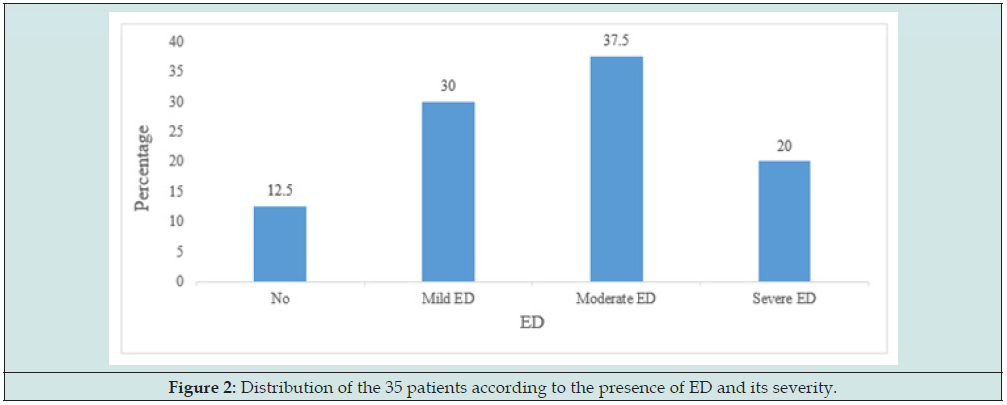
Our study included 40 chronic haemodialysis patients (Figure 1). The mean age of the patients was 51.43 ± 12.84 years, and the majority (42.5%) were between 50-64 years. All our patients were married, 80% of whom were monogamous. Hypertension was noted in 70% and diabetes in 25%. The average duration of hemodialysis was 45.21 ± 41.96 months. The causes of nephropathy were chronic hypertension in 47.5% and undetermined in 27.5%. Anemia was found in 97.5%. Tables 1 & 2 show the different clinical and biological characteristics of the patients. It should be noted that hormonal measurements such as testosteronemia were not available in our laboratory during the study period. The mean IIEF5 score was 15.0 ± 4.8. ED was found in 35 patients, standing for a prevalence of 87.5%, essentially of moderate grade in 37.5% and mild in 30% (Figure 2).
Table 1: Clinical data of patients.
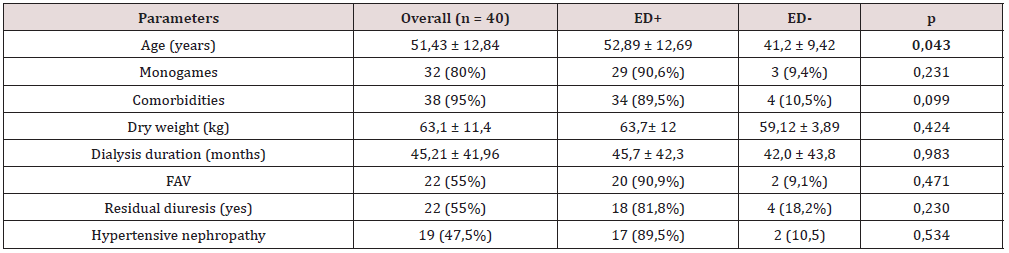
Table 2: Biological data of patients.
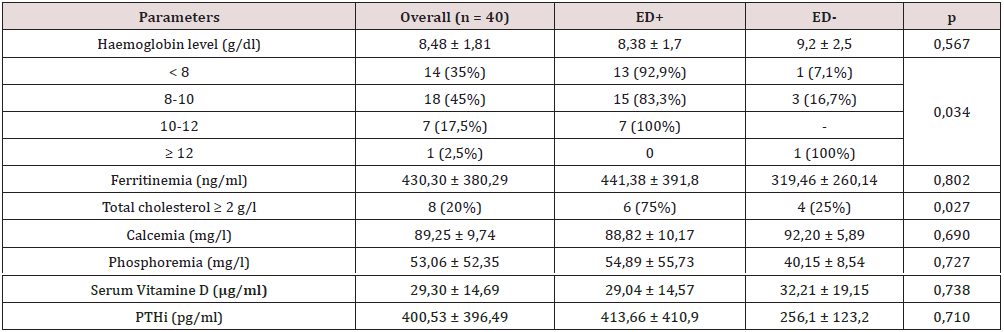
Figure 1: Flow chart.
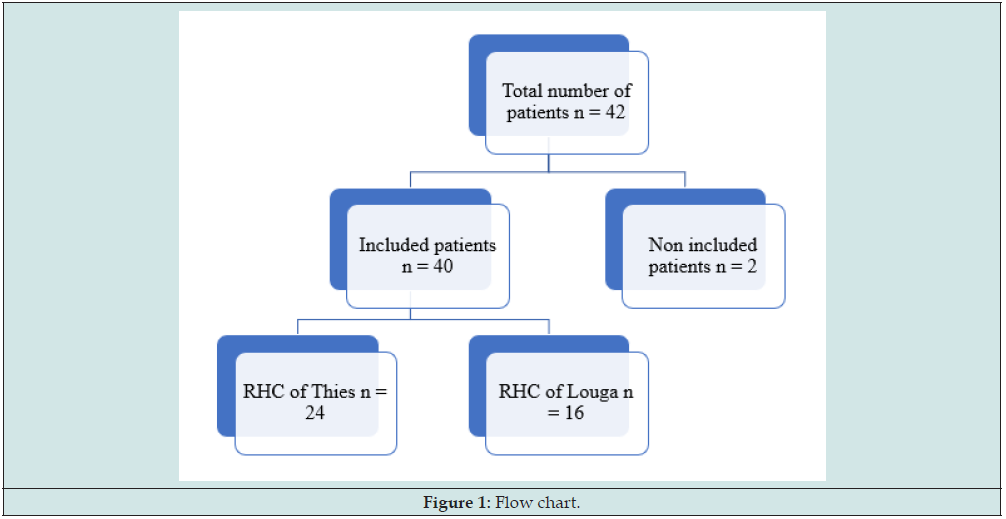
Figure 2: Distribution of the 35 patients according to the presence of ED and its severity.
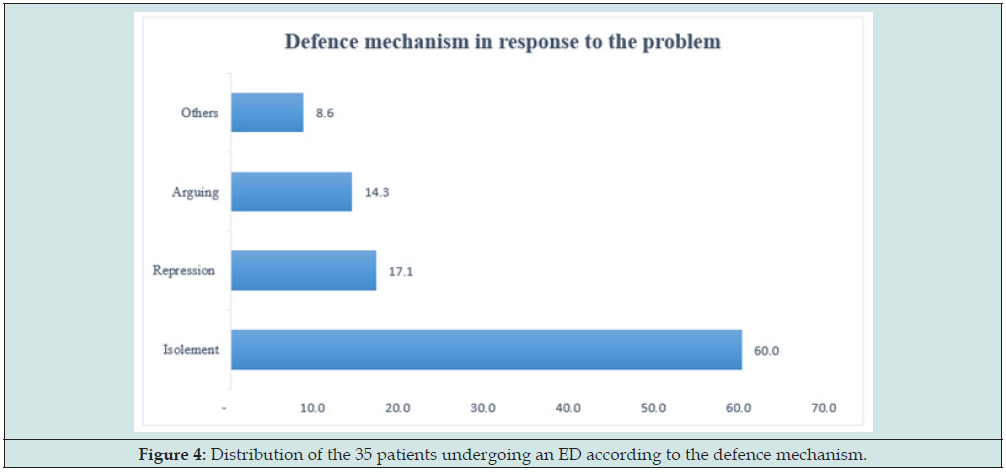
Rapid ejaculation was noted in 71.4% (25/35) and 28.57% of the patients had expressed a desire for andrology consultation. We assessed the psychosocial impact according to the patients’ feelings about sexual intercourse and their defence mechanisms against this problem (Figures 3 & 4). Of the patients with ED, only 6 (17.14%) had expressed a desire to consult a psychologist. The use of proerecting drugs was observed in 42.5% and sildenafil was used in 64.7% and herbal medicine in 23.5%. In our study patients with ED were significantly older than those without ED with a p value of 0.043. ED was statistically correlated with Hb level categories (p value = 0.034). There was a statistically significant association between ED and cholesterol levels with a p value of 0.027. However, no significant association was found between marital status, duration of haemodialysis, comorbidities (hypertension and diabetes), causative kidney disease and erectile dysfunction.
Figure 3: Distribution of 35 patients undergoing a ED according to the feeling regarding sexual intercourse.
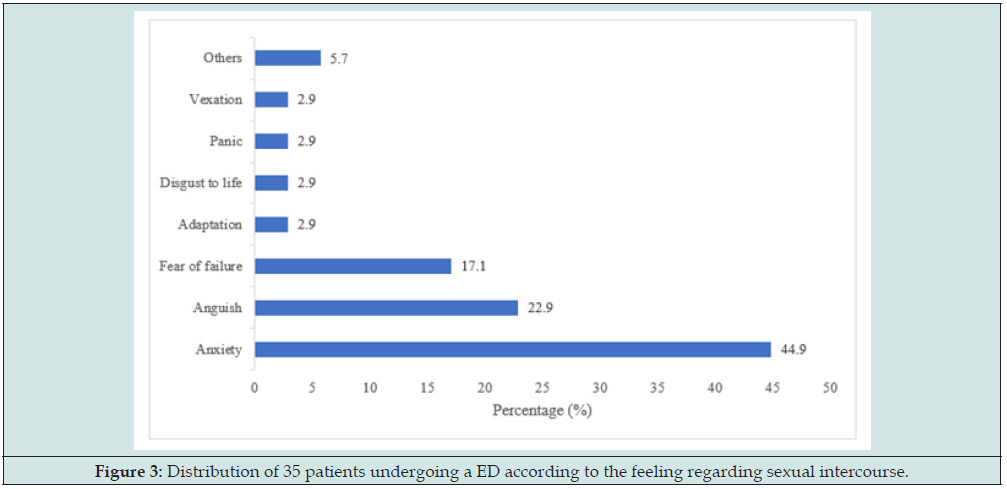
Figure 4: Distribution of the 35 patients undergoing an ED according to the defence mechanism.
Discussion
The prevalence of erectile dysfunction is high in CKD patients and increases with the severity of kidney disease [9]. In the literature it is estimated to be approximately 80%. The increased prevalence of ED in haemodialysis patients compared to the general population may be caused by vascular disease (endothelial dysfunction, arteriosclerosis), neuroendocrine and metabolic changes associated with the uraemic state, including lower testosterone levels, suppression of the pituitary testicular axis, hyperprolactinaemia, hyperthyroidism and zinc deficiency. In our study 87.5% of haemodialysis patients experienced ED. This result is similar to previous studies done in Senegal. Lower prevalences were observed in the USA and Turkey in 33% and 69.2% respectively [10,11]. These discrepancies are thought to be related to differences in methodology, diagnostic criteria or inter-individual variations. In addition, the high proportion of hypertensive patients and the high frequency of anaemia in our study population could actually impact on the number of ED cases. The mean IIEF5 score was 15.0 ± 4.8 in our ED patients. Oueslati et al. found a similar score of 15.62 ± 6.03.
ED in our patients was severe in 20%. Gorsane in Tunisia [12] and Avajoudjo in Benin [13] reported higher proportions of severe ED in 33.33% and 38.6% respectively. This could be explained by the quality of dialysis or the difference in the proportions of comorbidities. The method of renal replacement may have a role in the occurrence of ED. A lower incidence was found in peritoneal dialysis patients with 51.9% [14]. Thus, over the course of their course, renal transplant patients had a statistically significant increase in IIEF5 score compared to chronic dialysis patients. However, in our study all patients were under haemodialysis. The origins of ED appear to be multifactorial, involving organic and psychological disorders. Our patients were exposed to psychological factors such as anxiety (42.86%), anguish (22.86%), fear of failure (17.14%), panic (2.86%) and vexation (2.86%). These phenomena led to defence mechanisms such as isolation (60%), repression (17.14%) and arguing (14.29%). Ka EF et al noted: stress (24%), anxiety (21%), panic (16%), insomnia (16%) and fear of failure (16%). The desire to consult a psychologist was observed in 17.14% unfortunately we do not have enough specialists in our structures for better psychological care. The chronic fatigue and anxiety (due to the financial pressure of the disease) that prevail in haemodialysis patients can lead to a lack of sexual desire and a decrease in the frequency of sexual activities.
In addition, the fear that sex will worsen the disease may have a further negative impact on the frequency of sexual intercourse. All of these factors contribute to the deterioration of the quality of life of haemodialysis patients who are already exposed to other comorbidities. Their management often requires a multidisciplinary approach (nephrology, uro-andrology, psychiatry, etc.). We found a statistically significant association between age and ED. Lang in Singapore [15] and Costa in Brazil [16] found an independent association between ED and age. Other risk factors for erectile dysfunction appear with age. One such age-related risk factor is the presence of atherosclerosis, which is also a known risk factor for ED [17]. Endothelial dysfunction in cardiovascular disease may contribute to the pathogenesis of ED. The length of time on dialysis was higher in our patients compared to other work conducted in Senegal in 2011 and 2012 with 39.4 months and 27.3 months respectively. The improvement in access to dialysis in our country in recent years could explain this finding. No statistically significant association was found in our study and in several series the duration of dialysis did not influence ED [18,19].
We were able to demonstrate that ED was statistically correlated with Hb categories with a p value of 0.034. Low haemoglobin levels have been reported to be significantly associated with erectile dysfunction by Messina et al. [20]. Notre travail présentait certaines limites tels que la faiblesse de la cohorte ou l’absence de données sur les dosages hormonaux. In addition, several series have shown that EPO (erythropoietin) treatment improves erectile function in dialysis patients, suggesting that anaemia and/or EPO deficiency are involved in ED. In our series, a statistically significant correlation was noted between ED and cholesterol levels (p value = 0.027). However, other studies have not demonstrated this statistical link. On the other hand, Oueslati et al. showed that low HDL levels were a risk factor for ED in CKD patients. The high intake of herbal medicines in our study can be explained by the majority of our patients residing in rural areas where the consumption of these products is more observed. Our work had some limitations such as a small cohort or the absence of data on hormone measurements.
Conclusion
Our study showed that the prevalence of erectile dysfunction in chronic haemodialysis patients is very high. We were able to demonstrate the impact of certain factors associated with ED. However, in addition to pro-erectile drugs, better management of these risk factors would improve the sexual quality of life of uremic patients.
Limitations of the study
The size of the study population and the absence of hormonal assays were the main limitations of our work.
Declaration
All patients gave their consent to participate in the study.
References
- Rosen RC, Cappelleri JC, Smith MD, Lipsky J, Pena BM (1999) Development and evaluation of an abridged, 5-item version of the International Index of Erectile Function (IIEF-5) as a diagnostic tool for erectile dysfunction. Int J Impot Res 11(6): 319-326.
- H. Baka, Saïd Moudouni, G. Sanda, B. Sadiki, A.M. Lakmichi, et al. (2017) Prévalence de la dysfonction erectile en urologie. Afr J Urol 23(4): 327-330.
- Suzuki E, Nishimatsu H, Oba S, Takahashi M, Homma Y (2014) Chronic kidney disease and erectile dysfunction. World J Nephrol 3(4): 220-229.
- Rosas SE, Joffe M, Franklin E, Strom BL, Kotzker W, et al. (2001) Prevalence and determinants of erectile dysfunction in hemodialysis patients. Kidney Int 59(6): 2259-2266.
- Nassir A (2009) Sexual function in male patients undergoing treatment for renal failure: a prospective view. J Sex Med 6(12): 3407-3414.
- I Oueslati, O Mondher, S Azaiez, E Talbi, J Belagha, et al. (2017) Prévalence et facteurs de risque de la dysfonction érectile chez les insuffisants rénaux chroniques. Afr J Urol 23(4): 331-337.
- Elhadj Fary Ka, Sidy Mohamed Seck, Mouhamadou Moustapha Cisse, Ahmeth Tall Ould Lemraboot, Maria Faye, et al. (2014) Erectile Dysfunction in Chronic Hemodialysis Patients in Dakar: A Cross-Sectional Study in 2012. Nephrourol Mon 6(6): e21138.
- Seck SM, Dahaba M, Diouf B, Cisse MM, Gueye S, et al. (2011) The burden of erectile dysfunction in dialysis patients in Senegal. Hemodial Int 15(2): 280-283.
- Bellinghieri G, Santoro D, Mallamace A, Savica V (2008) Sexual dysfunction in chronic renal failure. J Nephrol 21: 113-117.
- Bacon CG, Mittleman MA, Kawachi I, Giovannucci E, Glasser DB, et al. (2003) Sexual function in men older than 50 years of age: results from the health professionals follow-up study. Ann Intern Med 139(3): 161-168.
- Akkus E, Kadioglu A, Esen A, Doran S, Ergen A, et al. (2002) Prevalence and correlates of erectile dysfunction in Turkey: a population-based study. Eur Urol 41(3): 298-304.
- Gorsane I, Amri N, Younsi F, Helal I, Kheder A (2016) Erectile Dysfunction in Hemodialysis Patients. Saudi J Kidney Dis Transpl 27(1): 23-28.
- J Avakoudjo, A Paré, J Vigan, I Gandaho, P Hounasso, et al. (2012) La dysfonction érectile chez les patients hémodialysés au CNHU-HKM de Cotonou: profil épidé Andrologie 22(4): 246-251.
- Lai C, Wang Y, Hung K, Peng Y, Lien Y, et al. (2007) Sexual Dysfunction in Peritoneal Dialysis Patients. Am J Nephrol 27(6): 615-621.
- Lau L, Adaikan P, Vathsala A, Srilatha B, Wong M, et al. (2018) Clinical Prevalence and Associated Factors of Erectile Dysfunction in Patients Undergoing Haemodialysis. Ann Acad Med Singap 47(2): 78-81.
- Márcio Rodrigues Costa, Alexandre Magno Bahia Reis, Bruno Paiva Pereira, Viviane Campos Ponciano, Enio Chaves de Oliveira (2014) Associated factors and prevalence of erectile dysfunction in hemodialysis patients. Int Braz J Urol 40(1): 44-55.
- Stolic RV, Bukumiric ZM (2010) Intima-media thickness of carotid arteries and erectile dysfunction in hemodialysis patients. Hemodial Int 14(4): 510-514.
- Naya Y, Soh J, Ochiai A, Mizutani Y, Ushijima S, et al. (2002) Significant decrease of the International Index of Erectile Function in male renal failure patients treated with hemodialysis. Int J Impot Res 14(3): 172-177.
- Malekmakan L, Shakeri S, Haghpanah S, Pakfetrat M, Sadeghi S, et al. (2011) Epidemiology of erectile dysfunction in hemodialysis patients using IIEF questionnaire. Saudi J Kidney Dis Transpl 22(2): 232-236.
- Messina LE, Claro JA, Nardozza A, Andrade E, Ortiz V, et al. (2007) Erectile dysfunction in patients with chronic renal failure. Int Braz J Urol 33(5): 673-678.

-

Mark E Smith
Bio chemistry
University of Texas Medical Branch, USA -

Lawrence A Presley
Department of Criminal Justice
Liberty University, USA -

Thomas W Miller
Department of Psychiatry
University of Kentucky, USA -

Gjumrakch Aliev
Department of Medicine
Gally International Biomedical Research & Consulting LLC, USA -

Christopher Bryant
Department of Urbanisation and Agricultural
Montreal university, USA -

Robert William Frare
Oral & Maxillofacial Pathology
New York University, USA -

Rudolph Modesto Navari
Gastroenterology and Hepatology
University of Alabama, UK -

Andrew Hague
Department of Medicine
Universities of Bradford, UK -

George Gregory Buttigieg
Maltese College of Obstetrics and Gynaecology, Europe -

Chen-Hsiung Yeh
Oncology
Circulogene Theranostics, England -
.png)
Emilio Bucio-Carrillo
Radiation Chemistry
National University of Mexico, USA -
.jpg)
Casey J Grenier
Analytical Chemistry
Wentworth Institute of Technology, USA -

Hany Atalah
Minimally Invasive Surgery
Mercer University school of Medicine, USA -

Abu-Hussein Muhamad
Pediatric Dentistry
University of Athens , Greece